AI Lead Follow-Up for Real Estate: What 2026 Data Shows
In October, one real estate software platform counted 387,824 leads that received at least one follow-up text or email written by AI. That single number tells you where the industry actually is in 2026. Agents have stopped asking whether AI should handle follow-up. They are asking why their follow-up still does not get replies.
AI lead follow-up works when the message carries three things: the context of the real conversation, a face and voice the buyer recognises, and one clear reason to answer now. It fails when it is a template sent at volume. Most agents have automated the drafting and skipped the part that earns the reply.
You do not need another CRM field. You need a follow-up that arrives in the first hour.
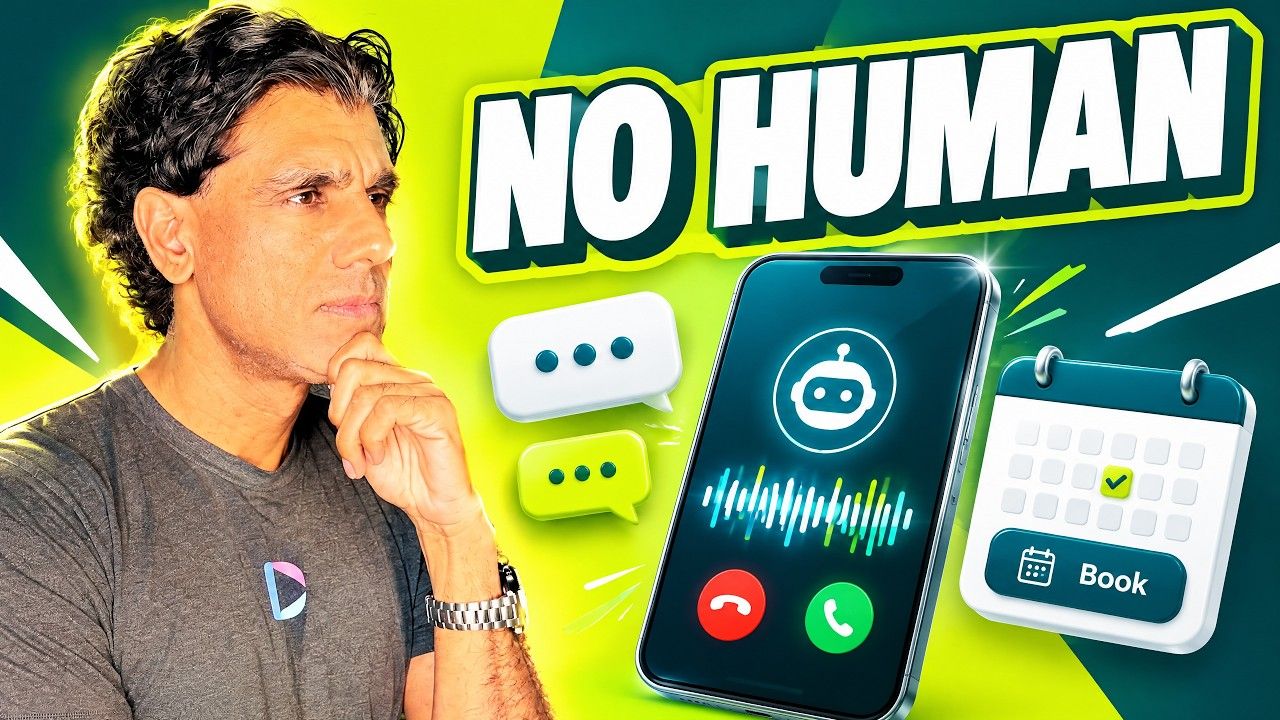
Dubb AI drafts the follow-up, records the video and tells you the moment a lead watches.
What the 2026 data actually says
Three data points from the last eight weeks tell the story better than any vendor page.
1. AI use is normal. Agentic use is not. The 2026 REALTORS Technology Report found 23% of agents use AI daily, up from 20% in 2025, and another 31% experiment with it occasionally. Only 12% said they have no plans to use it, down from 32% a year earlier.
2. The adoption is in drafting, not in decisions. Among agents who use AI, 52% use it to create emails and follow-up messages, 75% use it for listing descriptions and 56% for social posts. Just 11% use it to improve lead generation or prioritisation. Another 48% say AI lead generation and follow-up is technology they are watching rather than using.
3. The hours saved are now measured in public. A platform index published on 12 November 2026 counted 1.13 million AI tasks completed in October across roughly 100,000 agents, 131,248 hours saved, and 387,824 leads that received at least one AI follow-up.
Put those three together and the picture is clear. Agents have handed AI the typing. They have not handed it the judgement, and they have not yet connected it to the thing buyers actually respond to: a person they trust saying something specific.
| What agents already automate | What is still manual |
|---|---|
| Drafting follow-up emails and texts | Deciding who gets a call today |
| Listing descriptions and social captions | Recording the message that actually sends |
| Past client check-ins | Knowing when the buyer read it |
Why follow-up is where the money leaks
The 2026 Profile of Home Buyers and Sellers landed on 11 November with two numbers that should sit above every agent's desk. 88% of buyers said they would definitely or probably use the same agent again. Only 24% of repeat buyers actually did.
That gap is not a marketing problem. It is a follow-up problem. The same report found 90% of buyers and 92% of sellers used an agent, with 52% of first time buyers finding theirs through a referral. Business comes from people who already know you, and it is won or lost in the months when nothing is under contract.
Which is exactly the work AI is good at carrying: the check-in on the fourth month, the market update nobody asked for, the reminder two weeks before the lease ends. Those messages used to cost an agent an evening. Now they cost a review and a send.
Four places AI follow-up breaks
1. The message has no memory
"Just following up to see if you are still interested" is the most deleted sentence in real estate. A follow-up that could have been sent to anyone reads as bulk, and buyers treat it that way.
2. It arrives on the wrong channel
A buyer who gave you a mobile number and replied to a text in ninety seconds is not waiting for an email. A seller who sends long emails about the house wants the email. Match the channel they already used with you, not the channel your tool defaults to.
3. It asks for too much
Two calls to action is one too many. The follow-up that books the meeting asks for one small thing: a time, a yes or a reply with a number.
4. It sounds like a machine, and buyers now check
This is the newest break. TrustRadius's 2026 B2B Buying Disconnect report found 63% of buyers used AI during a purchase and 94% fact-check AI-generated information at least some of the time. The share who said they verify it always or very often rose from 58% to 72% in a year. Your AI-assisted text is being read by someone who now checks.
There is a compliance edge here too. The FCC has confirmed that AI-generated voices count as artificial or prerecorded voice under the TCPA, so an automated call needs the consent a recorded call needs. Text and call rules are covered in our guide to texting videos to leads.
The follow-up that gets replies: a video from you, timed by the watch
Here is the version of AI follow-up that survives the trust check. AI does the remembering, the drafting and the scheduling. You do the 45 seconds on camera that proves a human is on the other end.
- Let AI hold the context. The lead's last message, the property, the objection, the date they said they would decide. That lives in one record, not in your head.
- Record once, for that one person. 45 to 90 seconds. Their name in the first five seconds, their problem in the next sentence, one next step at the end.
- Put one call to action on the page. Book a call, open your calendar, or reply with a time. One.
- Send it where they already reply. Text with a link, email with a preview image, or both when the lead is cold.
- Follow the watch, not the calendar. The moment the notification lands, send one line. That is the whole advantage.
Video works here for a reason that has nothing to do with production value. A face carries tone, pace and intent, and those are the signals a buyer uses to decide whether you are worth an hour. A page that records the watch tells you which lead to call and which to leave alone. That loop is the difference between automating follow-up and automating noise.
Record the follow-up once. Send it to the next ten leads.
Same camera, same page, new name in every clip. Dubb handles the page, the call to action and the watch report.
What to actually write: three follow-ups that work
The structure is the same every time, and it takes less than ninety seconds. Name the thing they said. Add one piece of information they do not have. Ask for one small next step, or ask for nothing at all. The examples below are written for a buyer who asked about a listing and then went quiet.
The same hour: a text with a video link
"Dana, you asked whether the two bed on Maple would take an offer under asking. Recorded a 60 second answer with the three sold prices that decide it: [link]"
That message has memory, one number, and one link. It does not ask her to book anything yet, which is why it gets watched.
Day two: an email with a preview image
"Dana, one more thing on Maple: the seller's timeline moved a week because of the probate filing. That changes what a fast close is worth here. Two minute walk through of the dates, plus my calendar if you want to talk it through: [link]"
The preview image shows your face inside the email. The reader knows it is a video before they click, and the email stays small enough to land in the inbox rather than the promotions tab.
Day nine: a value drop with no ask
"Dana, three houses on your street closed this month. The one with the smaller lot went higher than anyone expected. Here is the one page summary: [link]"
No meeting request. No "checking in". Just something worth opening. This is the touch that keeps you in the conversation for the next six months, and it is the one most agents never send.
A three touch sequence you can run this week
| Day | Channel | What you send | The job it does |
|---|---|---|---|
| Day 0 | Text, within the hour | 60 second video: "You asked about the two bed on Maple. Here is the number that matters." | Answer the question while it is still a question |
| Day 2 | Email with a preview image | A different angle on the same problem, plus the calendar link | Catch the people who do not read texts at work |
| Day 9 | Email, no ask | One useful thing: a sold price, a rate change, a street update | Stay in the conversation without chasing |
Three touches, nine days, one ask in total. Most agents stop at one and count it as follow-up.
Run it across a team, not just one agent
One agent using AI follow-up is a habit. A brokerage using it is a system, and the system is what turns a good month into a repeatable one. Four decisions do most of the work.
1. One library, not sixteen personalities. Agree on one follow-up video structure, one call to action and one set of pages. Agents change the name, the property and the answer. They do not invent a new format every Monday. This is also the fastest way to onboard a new agent: they copy a structure that already works.
2. Someone owns the watch queue. The value of a watch notification disappears if nobody is looking at it. Decide who works the queue each morning: the agent for their own leads, an ISA for the shared inbox, or a team lead for anything marked hot. Without an owner, the data becomes another dashboard nobody opens.
3. Write the AI policy before you scale it. NAR has published a policy template for brokers, and the short version is this: agents are accountable for anything AI writes in their name. That means a review step on outbound messages, no client financial details in a prompt, and a clear rule that AI never sends a price opinion or a legal answer without a human check.
4. Review the sequence, not the message. Coaching one email is a waste of a meeting. Pull ten leads that went quiet last month, look at the three touches each received, and ask one question: where did the sequence stop? Almost every gap will be a missing second touch, not a badly written first one.
The teams that get this right tend to see the same pattern in the first month: fewer leads worked, more conversations, and a shorter gap between the first reply and the first appointment. That is the outcome a brokerage can actually staff around.
The three objections you will hear from your own team
"AI sounds fake and our clients will notice." They will, if you send a wall of generated text. They will not, if AI drafts the structure and you record the ninety seconds. The voice on the video is the part that answers the objection, which is why the video step is not optional.
"I do not have time to record videos for every lead." Recording is not the bottleneck. Deciding what to say is, and that is the part AI removes. One clip per lead, ninety seconds, straight after the call while the details are fresh. The agent who says they have no time is usually the one writing the same three paragraph email by hand at 10pm.
"My database is a mess, so automation will just make it worse." Start with the leads from the last thirty days. They are warm, the context is still in your notes, and nobody needs a perfect CRM to send a good follow-up. Clean the database while you work it, not before you start.
What to measure
| Signal | Where it lives | What it means |
|---|---|---|
| Delivered, never viewed | Video page | The subject or the first frame did not land. Change the opening line, not the offer |
| Watched under 10 seconds | Watch report | You opened with yourself. Open with their question |
| Watched to the end, no click | Video page | The ask was too big or too vague |
| Watched twice | Watch report | They are showing someone. Call today |
Dubb is a video sales platform, and the follow-up loop is the part we build around. Dubb AI drafts and schedules the touch, the video page carries one call to action, and the CRM shows who watched and when. If you want the product side, this walkthrough of the AI sales agent shows it on a real lead, and how to send and track videos covers the mechanics. For the agent side of the workflow, how real estate agents can use AI and generating real estate leads with AI pick up where this leaves off.
Frequently asked questions
What is AI lead follow-up in real estate?
AI lead follow-up is software that tracks where each lead stopped, drafts or records the next message, sends it on the right channel, and reports back who engaged. It covers the routine touches an agent cannot keep up with by hand.
Do real estate agents actually use AI for follow-up?
Yes, mainly for drafting. In NAR's 2026 Technology Report, 52% of agents who use AI said they use it to create emails and follow-up messages, and 23% use AI daily. Only 11% use it for lead generation or prioritisation, which is where most of the upside still sits.
What should an AI follow-up text say?
Name the thing they said, add one piece of information they do not have, and ask for one small step or nothing at all. Keep it under 15 words above the link. If the message would work for a different lead, rewrite it.
Will AI follow-up replace the agent?
No, and the 2026 data says the opposite is more likely. 94% of buyers fact-check AI-generated information, and 88% say they would use the same agent again. The agent stays. The admin goes.
Do I need a new CRM to do this?
No. You need a record per lead, a way to send a video link by text and email, and a report that shows who watched. If your CRM already does the first two, a video tool can sit beside it. Dubb includes its own CRM if you would rather have one system.
Is a video follow-up better than a text message?
A video is better for trust and for a decision that needs reassurance. A short text is better for speed and for a simple yes or no. The strongest sequence uses both: a text with a video link first, an email with a preview second.
What are the compliance rules for automated follow-up?
Consent comes first for texts and calls, opt out lines are required, and the FCC treats AI-generated voices as artificial or prerecorded voice under the TCPA. Keep records of consent and stay inside reasonable hours.
How fast should the first follow-up go out?
Inside the hour, while the conversation is still warm. If you cannot record a video in that window, send a short text that names their question and promise the video for later the same day.
Start with one lead and one video today
Connect your leads, let Dubb AI draft the follow-up, and record the 60 seconds that carries it. Free account, no card.