How Do You Turn Client Calls Into Content?
You turn a client call into content by recording it, then asking an AI agent to build assets from the transcript. The output is a landing page, a video script, a personalised email, a blog post, social posts and a content calendar, all written in the client's own language about their own situation. Nothing is invented, because the source is the conversation itself.
The reason this works is that a discovery call contains more specific, useful material than any brainstorming session. The problem in the client's words, the failed attempts, the numbers, the worry. That is the raw material for everything you would otherwise have to make up.
What this workflow is
It is a three step loop: capture, process, deliver. Capture the conversation as audio. Process it by handing the audio or transcript to an agent with a clear instruction. Deliver the result as a personalised piece of communication the client can actually use.
Most people do the middle step badly or not at all. They take notes during the call, which splits their attention, and then write the follow up from memory, which loses the specifics. The recording moves the clerical work to after the call, and the agent does it in seconds.
The side benefit is that you become a better listener while the call is happening, because you have stopped trying to write everything down.
Step 1: capture the conversation
There are three practical routes, and the right one depends on the call.
- A voice memo on your phone. Open the recorder, put the phone on the desk, and let it run. The file stays on your device, you own it, and you can delete it when you are done.
- The microphone in your assistant. If the tool you use has a record button next to the prompt, use it. You speak or play the call, the audio is captured, and the agent can work with it immediately.
- The meeting recording. If the call happened on a platform that records, use the transcript it produces. This is the least effort and the least private option, so check who has access.
Two housekeeping points before you make this a habit. Tell the client you are recording so you can follow up properly, and follow whatever consent rule applies where you operate. A recording made openly for a stated purpose is a normal business practice. A recording made quietly is a risk you do not need to take.
Step 2: hand it to the agent
The quality of the output depends almost entirely on the instruction. A vague request produces generic marketing copy, which is exactly what you were trying to avoid. A specific request produces something that sounds like it was written by someone who was on the call, because it was.
A prompt that works:
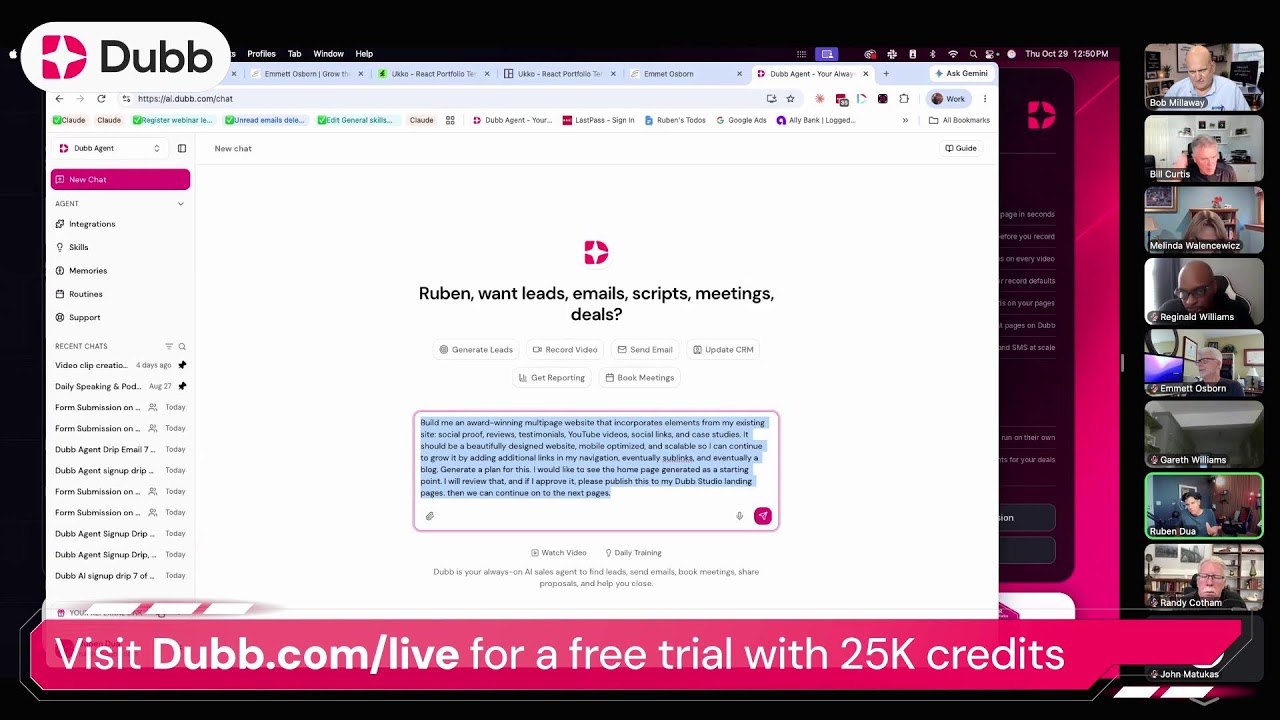
"This is the recording of a client call. Read it and pull out what they are struggling with, what they have already tried, what they said in their own words, and what a good outcome looks like for them. Then build a landing page for them, a 60 second video script, a follow up email, eight social posts and a content calendar for the next month. Use their language, not mine."
The last sentence matters. Without it, the output drifts into the vocabulary of the tool. With it, the client reads their own words back.
Step 3: what comes back
From one good discovery call, a competent agent will produce a set of assets that would otherwise take a week of scattered work.
- A landing page written around the specific problem the client described, not a generic service description.
- A video script for the follow up, in plain spoken language rather than brochure copy.
- A content calendar for the next month, mapped to the stories and expertise that came up in the conversation.
- Social posts drawn from the details the client volunteered, which are usually the most human part of the call.
- YouTube ideas built from the questions the client asked, which is a demand signal rather than a guess.
- An email or newsletter that continues the conversation instead of restarting it.
One example worth knowing about because it shows the pattern rather than a result. A client came to a call working three jobs, caring for someone at home and running a part time business, with a personal story about how a legal plan had protected his family. The agent turned that call into a full content calendar, a list of social posts and a set of video ideas, all built around the story he had already told. What made the material good was not the tool. It was that the tool had listened properly to a conversation that a human had already had.
Step 4: send it back to the client
The assets are the preparation. The moment of value is when the client opens something that is obviously about them. A personalised video with a landing page underneath it lands very differently from a template proposal with their name inserted.
This is also where the deal speeds up. The client sees that they were heard, in detail, and that the person they spoke to can execute. That combination answers the trust question that usually needs a second meeting to settle.
The same approach works on inbound form submissions, which researching form leads automatically walks through.
The rule that decides whether it works
Do not make it salesy. This is the single rule that determines whether the output builds a reputation or damages one. A personal story that turns into a pitch in the third sentence stops being a story, and audiences recognise it immediately.
The version that works leads with the situation and the lesson. The offer sits at the end, or in the profile, or nowhere at all. People who relate to the story will ask how to work with you. That is a much better position than asking them to click something before they care.
Manual notes vs a recorded call
| Consideration | Notes taken during the call | Recorded call plus agent |
|---|---|---|
| Attention during the call | Split between listening and writing | Fully on the conversation |
| Specifics after the call | Whatever you managed to write down | The full wording, including details you forgot |
| Follow up speed | Often next day or later | Same day, minutes after the call |
| Client language | Paraphrased | Quoted |
| Privacy | Notes stay with you | Depends on where the recording lives, so choose deliberately |
| Effort per asset | High, one asset at a time | Low, one prompt for several assets |
Common mistakes
- Recording without saying so. The fastest way to lose trust you had already earned. Say it out loud, explain the purpose.
- Asking for everything in one vague prompt. Specific instructions produce specific output. Name the assets you want.
- Publishing the raw transcript. A transcript is source material, not content. It needs structure, or it reads like a meeting.
- Using the client detail without consent. Anonymise anything that identifies someone who did not agree to be a case study.
- Turning a human story into a pitch. The story is the asset. The pitch is what kills it.
- Keeping the recording forever. Delete what you do not need. A smaller archive is a safer one.
Frequently asked questions
Do I need the client to agree to be recorded?
Yes, at minimum tell them you are recording so you can follow up accurately, and follow the consent rules that apply where you work. In many places a business call recorded openly for a stated purpose is normal practice. Doing it quietly is a risk with no upside, since most clients are perfectly happy when you explain why.
How long should the recording be?
Long enough to include the problem and the failed attempts, which is usually a normal discovery call. You do not need the whole meeting. If the call runs an hour, the useful section is often the middle twenty minutes, so trim before you hand it over.
Does the audio stay private?
That depends entirely on the tool you use, and it is worth checking before you record a client. A voice memo on your own phone stays on your device and you can delete it. A meeting platform recorder stores it on their infrastructure. Choose deliberately rather than by default.
What if the client talks about something confidential?
Separate the two things. Anything commercially sensitive or personal should be excluded from the material you produce, and you can simply tell the agent which sections to ignore. The useful part is usually the problem and the language around it, not the sensitive specifics.
Can I do this without recording, by typing notes after the call?
You can, and it is better than nothing, but you will lose the wording. The exact phrasing a client uses is the most valuable part, because it is what makes the follow up feel personal rather than generated. Typing from memory loses it within minutes.
If you want the recording, the script and the follow up video in one place, start a free 7-day Dubb trial.