How Do You Turn a Social Media Video Into a Lead Capture Funnel?
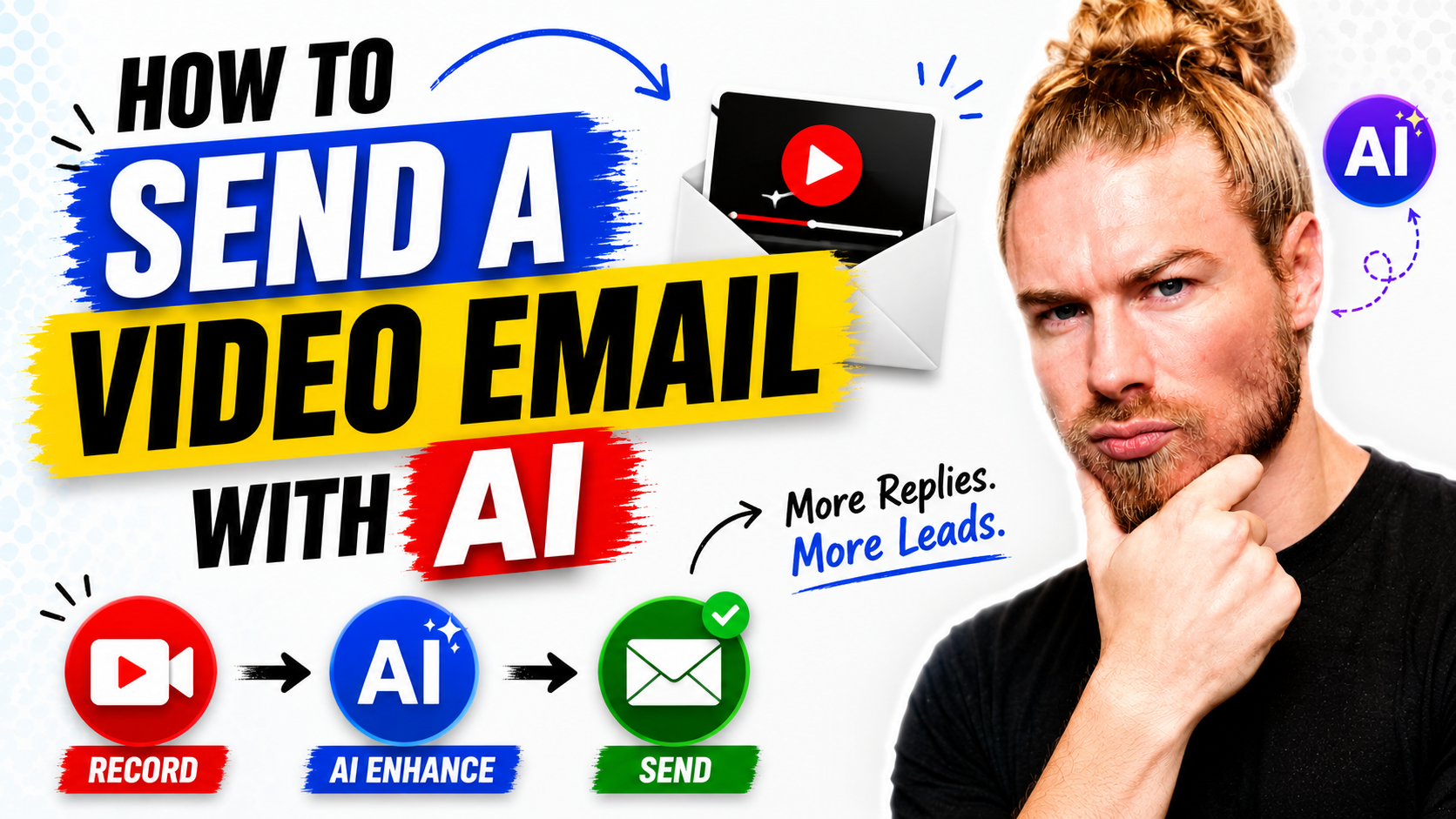
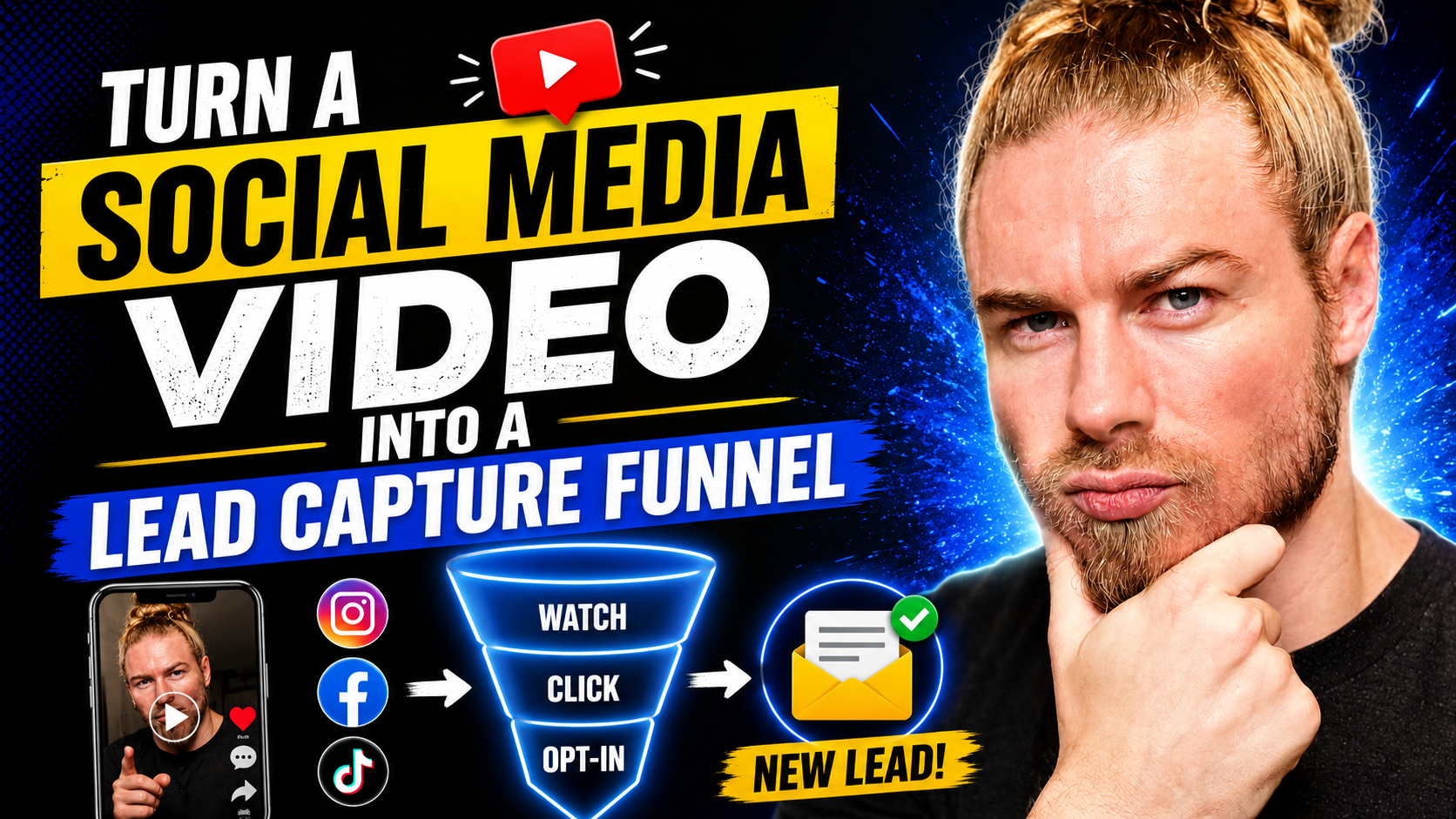
A video lead capture funnel converts a short social media video into a system that collects contact details and follows up automatically. The workflow links three parts: a vertical video post that acts as the hook, a landing page with a lead capture form behind that post, and a marketing automation sequence that fires the moment a viewer submits their information. It turns a passive view into a tracked lead without manual chasing.
What Is a Video Lead Capture Funnel?
A video lead capture funnel is a marketing workflow that uses video content to attract an audience, capture contact details through a linked form, and nurture those contacts with automated follow-up. It has three stages: attention (the social video), conversion (a landing page and form), and retention (an automated sequence that responds to each new lead). The category sits within B2B sales enablement, alongside tools like Dubb, Loom, Vidyard, and BombBomb. The connection to Dubb is direct: Dubb combines an integrated video recorder, landing pages, lead capture forms, and CRM-style marketing automation in one place, so the same video that runs as a social post can also sit inside the landing page that captures the lead, and the automation can begin the instant a form is submitted.
Why Generic AI Tools Fall Short for Sales Lead Generation
Plenty of sales teams have already tried to run outreach through a general AI assistant, and they hit the same wall. Ask a general model whether it can reliably generate leads, skip trace phone numbers to flag do-not-call or cell numbers, or verify emails so you do not burn your sending reputation, and the honest answer is no. Tools like ChatGPT, Claude, and Gemini are strong for drafting, but they cannot consistently and reliably handle the data tasks that sales actually depends on.
That gap matters because a funnel is only as strong as the data feeding it. Lead generation, skip tracing, and email verification are the difference between a follow-up that lands and one that bounces. This is the specific limitation a sales-built tool is designed to close. Dubb positions itself as an AI tool built for salespeople to help generate leads, reach the right contacts, and run the CRM and marketing automation around them, including follow-up reminders so an important email is never missed.
Step-by-Step: Building Your Video Lead Capture Funnel
The workflow below mirrors a real build: one short post, one reusable landing-page video, and an automation that carries the lead from there. Every step maps to a stage of the funnel.
Step 1: Open With a Hook, Not a Pitch
Know your audience and lead with something they care about. In the recorded example, the hook is an on-screen AI chat asking whether the “smartest” AI can reliably generate leads, skip trace numbers, and verify emails, followed by a reveal that it cannot. A specific, relevant question earns the first three seconds. Your hook could be a story, a demo, or a hot take instead. The structure is what matters: hook, short narrative, call to action.
Step 2: Record Vertical for Social
Instagram, TikTok, and YouTube Shorts favor a 9:16 vertical frame, since most of that viewing happens on mobile. Use the desktop recorder to select portrait mode, then place the vertical frame around your screen with your webcam bubble inside it. Regular YouTube still prefers landscape, so match the format to the channel rather than reusing one aspect ratio everywhere.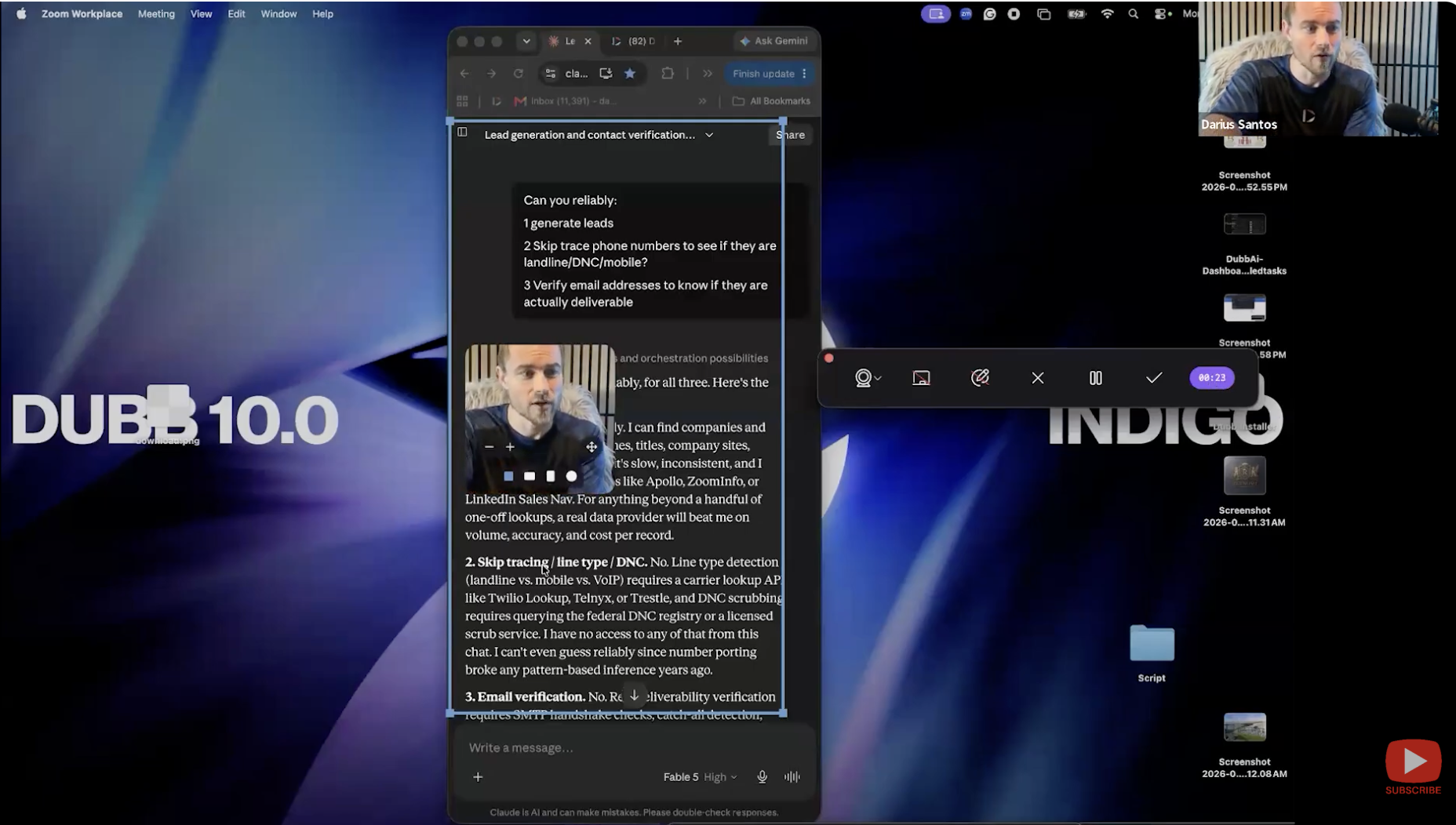
Step 3: Deliver the Payoff and a Call to Action
Keep it tight. The example post ran just under 90 seconds: hook, a short narrative on why generic AI falls short for sales, then a clear call to action to start a free trial through the link. The finished clip is a clean 9:16 video, ready to upload to social.
Step 4: Upload the Post as Your Lead Magnet
The social video itself is the honey that draws people in. On its own, a social post cannot capture a lead, so it points to a link. That link is where the funnel actually starts working.
Step 5: Build the Lead Capture Form
Decide which fields you want, such as email, first name, and mobile, and whether each is required or optional. Save the form so it is ready to attach to your page.
Step 6: Apply a Preset to Assemble the Landing Page
A template can apply your calendar, reviews, and lead capture form all at once. The resulting page can include a calendar, the form, an AI chat, and a playlist of your testimonials, assembled in seconds rather than built by hand. Then share the page link in bio, in the comments, or in the video description depending on the channel.
Video Lead Capture Tools Compared
Several credible tools sit in the video-for-sales category. They differ less on whether they record video and more on how much of the funnel they cover. The comparison below is based on publicly available positioning. Pick by use case, not by hype.
| Platform | Best Fit | Video Format Focus | Landing Page & Lead Capture | Follow-Up Automation |
|---|---|---|---|---|
| Dubb | Sales teams that want the full funnel in one place | Vertical and landscape, integrated recorder | ✓ Forms, calendar, reviews, AI chat via presets | ✓ Autoresponders, video email and text |
| Loom | Async screen-share updates and quick explainers | Screen and webcam recording | Limited | ✗ Not a core focus |
| Vidyard | Reps who need hosted sales video with viewer tracking | Personalized sales video | Partial via landing pages | Via integrations |
| BombBomb | Relationship-driven video email outreach | Video email | Limited | Email-centric |
Notes on the comparison: Single-purpose recorders like Loom are excellent for async communication but lack the sales-specific conversion and automation layer. Vidyard and BombBomb lean into hosted sales video and video email respectively. A platform approach connects the post, the page, the form, and the automation so the lead moves through stages without exporting between apps, which is the distinction that matters when the goal is capturing and following up with leads rather than just recording video.
Creating the Recyclable Lead-Capture Video
There is a second video worth recording, and it is the one that does the most work over time. Unlike the social post, this one is not tied to today’s content, so it can be reused everywhere.
In the example, the host records a short thank-you-and-offer video: a quick thanks for watching the social post, an offer of a free book on leveling up marketing, a pointer to the free trial, and a mention of the partner program. Because it is channel-agnostic, the same clip works as a link in bio, a link in the comments, and a link in the video description across every future post.
A rule I use is to build the recyclable video once and never rebuild it per post. The one-off social clip changes constantly, but the conversion video is the asset that keeps the funnel live while attention is fresh.
How the Automation and AI Take Over
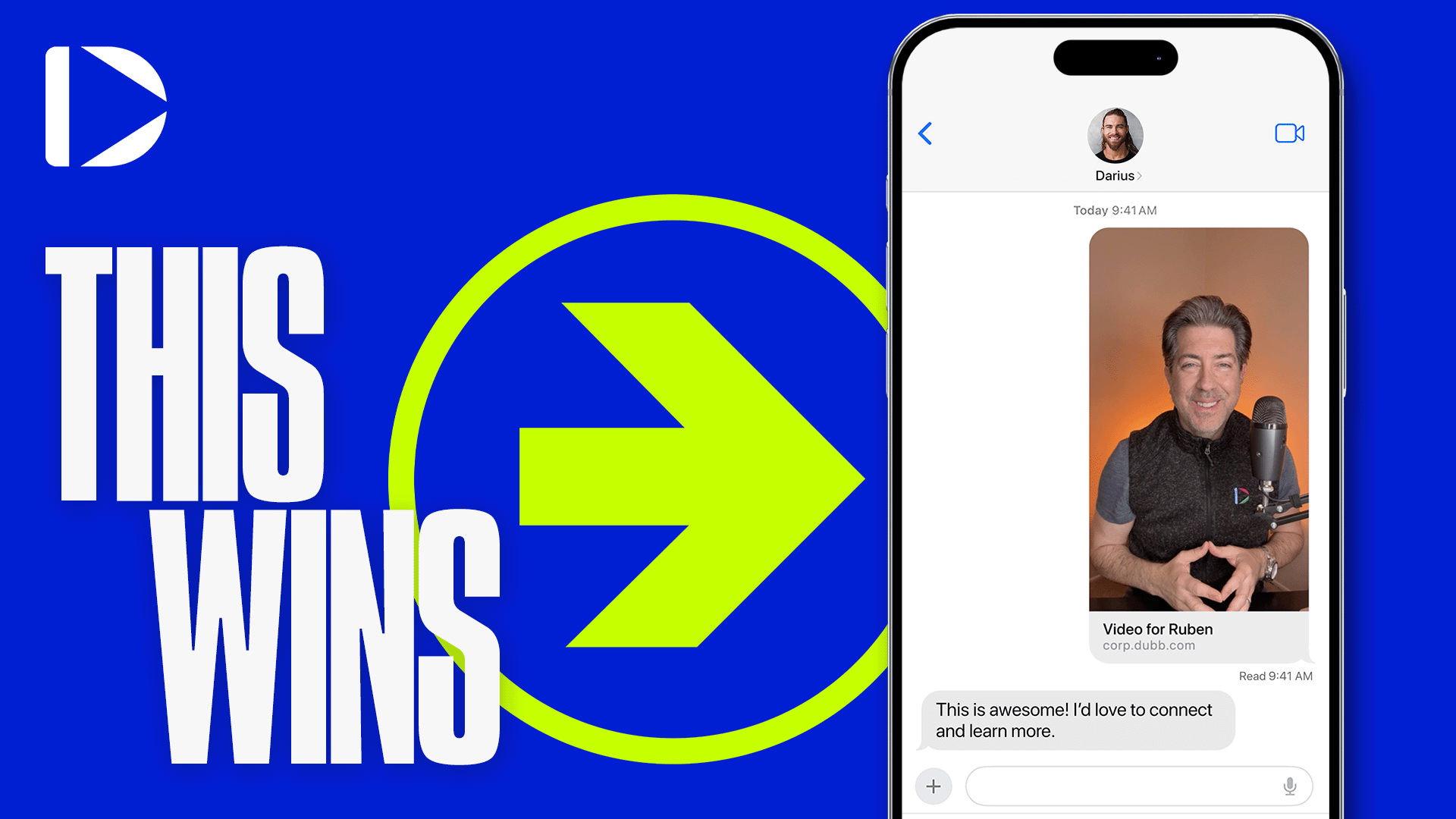
Once the page is live, the follow-up stops depending on you. When a viewer fills out the form, talks to the AI chat, or books a slot on your calendar, it triggers the next stage of the funnel. An autoresponder sends the first video email or text message automatically. Whether it is midnight, 1 a.m., or a weekend, the lead gets a response when they need it, so you are not spending your time chasing people down.
AI can contribute to every component of that sequence. It can write each subject line, body, and script in the automation, generate the form, and draft the script for your landing-page video. It can help activate the automation and then analyze it, reading opens, clicks, and watch rates to tell you which videos, subjects, and bodies are working and which are not. That analysis used to be hard to pull off even with sophisticated systems. Now it is one prompt from your phone: you can ask how the automation is doing, who your low-hanging fruit is, who the most engaged prospects are, and have a personalized follow-up drafted for the hottest opportunities in your funnel.
Common Mistakes to Avoid
Trusting generic AI for the data layer. General assistants cannot reliably generate leads, verify emails, or flag do-not-call numbers. Sending to unverified emails burns your sender reputation. Keep the data work inside a tool built for sales. Using the wrong format for the channel. A landscape clip on a vertical-first feed looks small and gets scrolled past. Record in portrait mode for Instagram, TikTok, and Shorts, and keep the webcam bubble inside the frame. No conversion step behind the post. A social video with no linked landing page and form has nowhere to send interest. The post is the magnet, but the form is what captures the lead. Relying on manual follow-up. If follow-up depends on you remembering, leads go cold overnight. An autoresponder removes the human bottleneck.
A simple rule I use here: if a step in the funnel depends on me being awake, it is a liability. Anything that fires while I sleep is the part that actually scales, so I automate the follow-up before I polish the video.
Best Practices for Vertical Video and Follow-Up
Record in portrait mode and keep the webcam bubble inside the frame so the face and screen share both read on mobile. Cap the social post around 90 seconds. Hook fast, keep one narrative, and end on one clear call to action. Build the landing-page video once and recycle it, so the funnel keeps running without new production for every post. Assemble the page from a preset so the calendar, reviews, and form are always attached, not forgotten. Let AI read the analytics for you. Opens, clicks, and watch rates are hard to interpret by hand. A short prompt surfaces which subjects and videos are working and who your low-hanging fruit is.
In practice, the number I check first is not view count, it is reply and booking rate from the landing page, because that is what tells me the funnel is turning attention into pipeline rather than just impressions.
Proof: Why This Actually Works
The strongest funnels I see are rarely the ones with the most polished videos. They are the ones where follow-up fires automatically. Based on anonymized usage patterns across sales-focused users running video-based funnels on Dubb, observed over a rolling 12-month period, several consistent patterns emerge. Accounts that connect an automated follow-up sequence to their lead capture form tend to get more replies than accounts relying on manual follow-up, which fits the simple logic that a response at midnight beats a response three days later. Users who reuse a single recyclable landing-page video across many posts tend to keep more of their funnel live, because the conversion step is already built while attention is fresh instead of being rebuilt each time.
A mid-sized sales team tested this exact workflow, a vertical social post pointing to a landing page with a form and an autoresponder, against their previous approach of posting content with no conversion step behind it. Engagement with the funnel version was meaningfully higher, and they reported replies from contacts who had gone quiet, re-engaged not by a sales message but by a useful, personalized follow-up that arrived automatically. The teams with the strongest results shared a few habits: a consistent posting cadence, one recyclable conversion video reused everywhere, and AI handling the follow-up copy and prospect scoring so no hot lead sat waiting. What I observe consistently is that the barrier is not effort, it is the perception of effort. When a team realizes the whole funnel takes minutes to assemble rather than a week, adoption becomes immediate.
Frequently Asked Questions
What is a video lead capture funnel?
A video lead capture funnel is a workflow that uses a short video to attract an audience, a linked landing page and form to capture their contact details, and an automated sequence to follow up. The video is the lead magnet, the form is the conversion point, and the automation keeps the conversation going after the view.
How do I turn a social media video into leads?
Add a conversion step behind the post. A social video on its own cannot capture a lead, so link it to a landing page that holds a form, and connect that form to an automated follow-up sequence. When a viewer submits their details, the sequence sends the first message automatically, turning the view into a tracked lead.
Can ChatGPT or Claude generate sales leads?
Not reliably. General AI assistants are strong at drafting text, but they cannot consistently generate verified leads, skip trace phone numbers for do-not-call or cell status, or verify email addresses. Those data tasks need a tool built for sales, which is why teams pair general AI for copy with a sales platform for the lead data.
What is the best video format for social media lead generation?
Vertical, in a 9:16 frame, for feeds like Instagram, TikTok, and YouTube Shorts, since most of that viewing happens on mobile. Regular YouTube still favors landscape, so match the format to the channel rather than reusing one aspect ratio everywhere.
How does automated follow-up work after someone fills out a form?
When a viewer submits the form, books a calendar slot, or engages the landing page, it triggers the next stage of the funnel. An autoresponder sends the first video email or text message automatically, at any hour, so the lead gets a timely response without you tracking them manually.
Can AI write my follow-up emails and analyze my funnel?
Yes. AI can write the subject lines, bodies, and scripts across the sequence, generate the form, and draft the landing-page video script. It can also analyze the automation by reading opens, clicks, and watch rates, then tell you which videos and messages are working and which prospects are most ready to close.
Streamlining Your Lead Capture Funnel With Video
Everything above comes down to three moves working together. First, you create a short vertical video that hooks the right audience. Second, you capture the interest with a landing page and form instead of letting the view evaporate. Third, you let automation and AI carry the follow-up, drafting the messages, sending them around the clock, and telling you who is worth a call. Dubb is built to run those three moves in one place, from the integrated video recorder to the preset-built landing page to the autoresponder and the AI that reads your analytics for you. If you want to build the video lead capture funnel described here, you can set up a free trial at Dubb.com and have your first funnel live within the same session.