TikTok Growth with Dr. Robin Kiera: 200M Views
Dr. Robin Kiera has over 500,000 followers and roughly 200 million views on TikTok, built while running an insurance and finance consulting business rather than a media company. That combination is the reason this episode is worth an hour: the audience was a byproduct of selling, not a separate career.
He is the founder and CEO of Digitalscouting, a consulting and marketing agency based in Germany, and works with sales and marketing teams in insurance and finance. He is also an author and speaker, which shows in how he talks about content: structured, not accidental.
This piece breaks down what he actually does, then translates it for a business that has no intention of becoming a media company: the starting position, what attention hacking means, the psychology behind a hook, why short form matters commercially, how to run it without a production budget, and where the video fits back into the sales process.
What he had before TikTok
The detail that gets lost in follower counts is the starting position. Dr. Kiera came to short form video with a subject he had already taught for years, in an industry that is famously bad at explaining itself. The audience did not come from entertainment. It came from being useful on a topic people are forced to think about.
That matters if you are planning to copy him, because the tactic is not "post more". The tactic is "be the clearest explainer of the thing your market already worries about".
Most businesses start in the opposite order. They pick the platform, then look for something to say, then wonder why nothing lands. The order that works is subject first, audience second, format third. A consultant who has answered the same three client questions for a decade already owns the raw material for 50 videos; they just have not written it down.
What attention hacking means
The term he uses for his approach is attention hacking: earning the first second before the message gets a fair hearing. On a feed, the viewer is not deciding whether to trust you. They are deciding whether to keep scrolling, and that decision happens before any of your reasoning lands.
Three consequences follow from that, and they are the same on every short form platform:
- The first frame is the ad for the video. If it does not raise a question, the rest is unwatched.
- Clarity beats production value. A clear sentence in average light out performs a beautiful shot that says nothing.
- Repetition is the strategy. One good video is a coincidence. The same shape of video, published consistently, is a channel.
The full method, including how he builds and tests hooks, is in the episode. What follows is how to take the principle into a business that is not trying to become a media company.
Why a business should care about short form
It is the cheapest attention available, and the algorithm does the distribution work that used to require a media budget.
It compounds into trust. A prospect who has watched six of your clips arrives at the call already half sold.
It feeds the rest of the motion. The same clip that earns a view can be sent as a link in a direct message, embedded on a page, or used as the opener in a follow up sequence. One recording, several jobs.
There is a fourth reason that applies specifically to regulated industries like insurance and finance: short form is where the questions are. People ask the things they are embarrassed to ask an adviser, in public, on camera. Answering those questions honestly is both content and market research, and it earns the right to be the person they call when the decision gets real.
Applying it without a production budget
The production question is the one that stalls most teams. The answer is uncomfortable: the constraint is not equipment, it is the willingness to be plain on camera.
The minimum viable setup:
- A phone on a stand, at eye level, vertical
- A window in front of you, or one lamp, so your face is lit and the background is not
- A quiet room and a microphone close to you, because bad audio loses viewers faster than bad video
- Captions, always, because a large share of viewing is silent
A teleprompter removes the memory problem if you need a script. Dubb includes one, and the setup is covered in recording with a teleprompter. What you should not do is polish your way into delay. Ten plain videos published is a strategy; one perfect video in progress is a hobby.
Building a hook that survives the first second
The hook is not a trick line, it is a promise. Four shapes that work in a business context:
The correction. "You do not need a bigger budget, you need a shorter answer." Start by contradicting the assumption the viewer arrived with.
The number. "This one clause costs most small businesses more than their insurance premium." Specificity buys attention because it implies evidence.
The mistake. "I got this wrong for six years." Failure is the fastest route to credibility, provided the lesson follows.
The question the market is afraid to ask. Name the thing nobody says out loud, and the viewer feels seen.
Then keep the video to one idea. A 30 second clip with a single point out performs a 90 second clip with three, because the second idea is where people leave.
The psychology underneath the hook
Attention hacking sounds like a growth tactic. It is closer to applied psychology, and the mechanics are the same ones that make a game hard to put down or a shop easy to walk through.
Three drivers are worth understanding because they decide whether a clip is watched to the end:
- An open loop. A question raised and not immediately answered creates a small tension. The viewer stays to close it. That is why the correction opener works: it states a claim and delays the reason.
- A visible reward. Somewhere in the clip there has to be a payoff: a number, a script, a rule of thumb. Without it the viewer feels used and stops following.
- Low effort to start. The first sentence has to be short and plain. Anything that requires context before it makes sense loses the room.
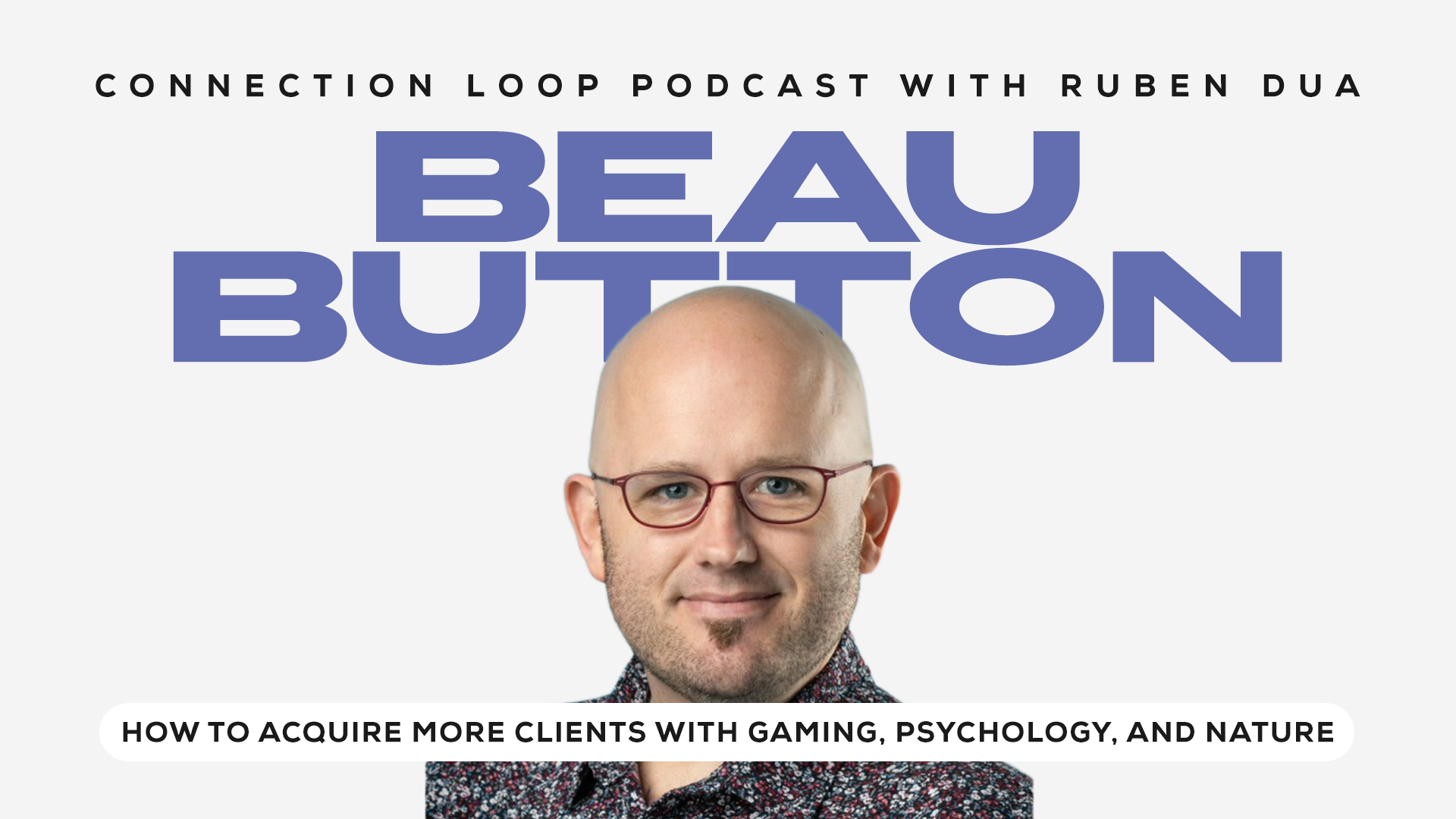
This is the same territory as gamification and behavioural hooks in a product or a store, where small rewards and clear progress keep people engaged. Beau Button makes that case from the software side in how to acquire more clients with gaming, psychology and nature, and the underlying principle is identical: earn the next step with something the person values now.
The line not to cross is manufacturing false urgency. Borrowed pressure works once and then trains the audience to distrust you, which is a bad trade for a channel you plan to run for years.
A cadence a working professional can hold
Three clips a week is achievable if you record in a batch. One sitting, one shirt, three ideas, 20 minutes. That is the whole production calendar.
A rotation that avoids the blank page:
- Monday: answer the question you were asked most last week
- Wednesday: correct a common misunderstanding in your field
- Friday: one story from a client, with permission and no names if needed
Keep a running note on your phone. Every time a client asks something that makes you pause, it goes in the note. That list is your content calendar, and it never runs dry because the market keeps asking.
Where video fits in the sales process
Public short form earns attention. It does not close anything by itself. The commercial value appears when the same person who watched a clip gets a message that references it.
Three places to put video once someone is in the funnel:
The first reply. A 45 second clip that answers their specific question beats a template, and the fact you sent it as a link means you can see whether they watched.
The follow up. When a lead goes quiet, send the clip that answers the objection they stopped at. In real estate this is the difference between chasing and timing, and the sequence is covered in AI lead follow up for real estate.
The text message. Most people read a text within minutes and almost nobody opens a cold email that fast. A short link with a preview image works, and the format is covered in sending video by SMS.
The point is that the content and the outreach are one system. A clip published on Monday becomes the thing you send on Thursday, and the watch data tells you who to call on Friday. Dubb handles the send and the reporting, and you can try it on your next ten messages.
What this looks like for a team of ten
One person posting is a habit. Ten people posting needs a system, or the channel becomes a feed of announcements nobody watches.
A structure that holds:
- One owner for the calendar. Someone decides the three weekly topics across the team, or everyone posts the same thing.
- Two people on camera per week. Rotate, so the audience gets familiar with more than one face and the load stays small.
- One shared library. Every clip goes into the same place, tagged by objection or question, so a rep can find the right one in ten seconds.
- One review on Friday. Fifteen minutes: what got replies, what got nothing, what goes in next week.
Measure the team on conversations started, not on views. A ten person sales team producing 12 clips a month and 20 conversations off them is a working channel. The same team producing 60 clips and no conversations has built a broadcast, not a pipeline.
What to measure when reach is not the goal
Follower count is a vanity metric for a business account. Four numbers that tell you whether short form is working:
- Completion rate. If people watch to the end, the promise in the first second matched what you delivered.
- Saves and shares. These cost the viewer something, which makes them a stronger signal than a like.
- Profile visits per thousand views. This is the step where attention becomes interest. If it is flat, the videos are entertaining but not relevant.
- Conversations started. The only number that pays. Count the DMs, replies and calls that began because of a clip.
Review monthly. Weekly numbers on short form are noise, because one clip can carry a month.
Five mistakes that kill a business account
Chasing trends outside your subject. The views arrive and none of them can buy from you. Relevance beats reach every time for a business.
Reading a script on camera. Viewers can tell within two seconds, and the trust you were building disappears with it. Learn the shape, not the words.
Publishing without a reason to stay. Every clip should end with something: a question, a next clip, a link. Otherwise you earned attention and spent it on nothing.
Quitting at week four. The compounding in short form is slow for 60 days and then sudden. Most business accounts die in that window.
Never using the audience. A following with no offer behind it is a hobby. Put the same clip in your outreach, your page and your follow up, and the audience becomes pipeline.
Frequently asked questions
Who is Dr. Robin Kiera?
Founder and CEO of Digitalscouting, a consulting and marketing agency in Germany that works with sales and marketing teams in insurance and finance. He is an author and speaker, and has built over 500,000 followers and roughly 200 million views on TikTok.
What is attention hacking?
His term for earning the first second on a feed, before the viewer decides whether to trust you or keep scrolling. It is the part of short form that happens before any of your reasoning lands.
Do I need a production budget to start?
No. A phone at eye level, a window, a microphone and captions will do. The constraint is usually the willingness to be plain on camera, not the equipment.
How often should a business post short form video?
Three clips a week, recorded in one sitting. Consistency matters more than volume, and batching is what makes consistency possible.
Does TikTok work for B2B and regulated industries?
It works where people have questions they are embarrassed to ask in public. Insurance and finance are full of those, which is why the approach transfers.
How do I connect short form video to sales?
Send the same clip as a link in your first reply and follow up. The watch data tells you who to call, which is the part a view count never does.
Is a personal account or a company account better?
The personal account usually wins for sales, because people follow people. Use the company account for product and support content, and let the team be the front door.
Start creating video messages today
Pick the three questions your market asks most, record three clips in one sitting, and send one of them to five people who already know you. That is the whole start, and the audience is the byproduct.