Generative AI produces something when asked: text, an image, an analysis. Agentic AI produces something and then acts on it, using tools and integrations to carry out multi-step work. The distinction is about capability rather than brand, and a single system can do both, generating a document and then sending it without a second instruction.
What Is Agentic AI?
Agentic AI is a system that can pursue a goal across multiple steps, choosing and using tools along the way, rather than returning a single response and stopping. Its defining characteristic is action: it reaches outside the conversation to read, write, fetch, or send, and it continues until the goal is met or it fails.
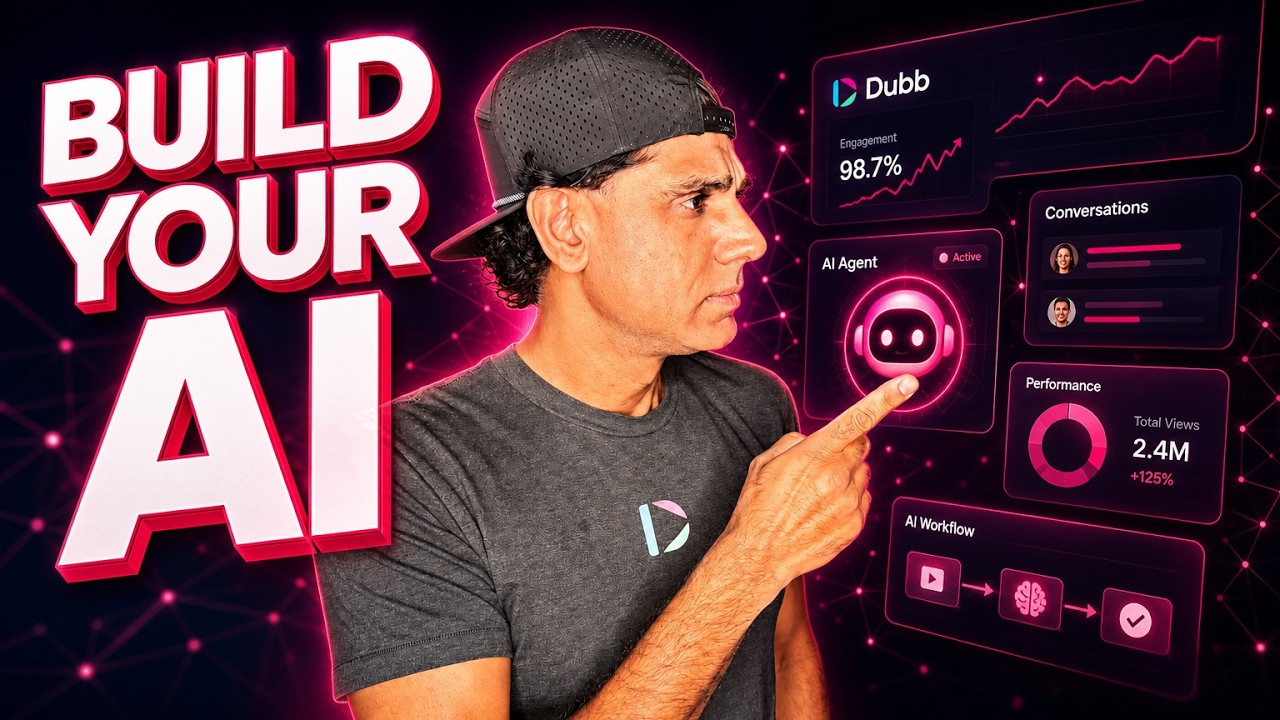
Underneath, it is still a large language model doing the reasoning. What makes it agentic is what it has been connected to and permitted to do. Dubb Agent works this way, generating content and then acting on it in the same pass, and it draws on prompts, skills, and memories to decide how.
Table of Contents
- The One Sentence Version
- Generative Produces, Agentic Acts
- Where That Line Has Moved
- The Five Words, Untangled
- Prompts: The Instruction
- Skills: The Reusable Procedure
- Memories: What It Keeps About You
- Bots: The Packaged Front Door
- Agents: The Thing That Uses the Others
- A Worked Example: Building a CMA
- When a Prompt Should Become a Skill
- What This Means When You Buy
- Common Mistakes and Misconceptions
- Best Practices I Actually Follow
- Proof: Why This Distinction Holds Up
- Frequently Asked Questions
- One Thing Can Be Another, But Not Always
The One Sentence Version
These words overlap, and that is the source of most of the confusion. One thing can be another, but one thing is not always another.
A long prompt can function as a skill. A prompt can activate an agent. But an agent is not a prompt, and it is not a skill. An agent is the thing that uses prompts and skills, which is a different category altogether.
If you take one idea from this article, take that shape: prompts, skills, and memories are ingredients. An agent is a thing that cooks.
Generative Produces, Agentic Acts
The cleanest way in is to ask what happens when the system finishes thinking.
Generative AI hands you something. You ask for a summary, a list, an image, an analysis, and you receive it. The output is the end of the interaction. What happens to it next is your problem: you copy it, paste it, edit it, send it.
Agentic AI goes and does something. You describe an outcome rather than an artefact, and it takes the steps. Pull the records, check them against a list, draft the messages, send them. The output is a changed state in the world rather than a block of text on your screen.
Consider the difference between asking for an email sequence and asking for the sequence to be written, personalised per recipient, and sent on a schedule. The first is a writing task. The second involves reading a contact list, using a sending system, and handling failures, none of which is writing.
And the two combine. A system can generate a document and then act on it in one pass, which is usually the point.
Where That Line Has Moved
Worth being current about this, because the usual way of explaining it has aged.
The distinction is often taught by naming a chat assistant as the generative example and saying it cannot take actions. That was a fair illustration when the vocabulary was new. It is not accurate now. The major general assistants have shipped agent modes that browse, connect to other services, and carry out multi-step tasks, and more arrive regularly.
So the line does not run between products. It runs through them, and it runs through individual sessions of the same product. The same assistant can be purely generative in one conversation and agentic in the next, depending on what it has been connected to and what you have permitted it to do.
The useful question is therefore never "is this tool agentic." It is: what is this system connected to, what is it allowed to do without asking me, and what does it do when a step fails. Those three questions survive every product announcement. Brand comparisons do not.
The Five Words, Untangled
Five terms get used interchangeably and should not be. Here is each one, and more usefully, what each one is not.
| Term | What It Is | What It Is Not | Lives For |
|---|---|---|---|
| Prompt | An instruction you give, long or short | Not a capability. It asks; it cannot do | One turn, unless you save it |
| Skill | A reusable procedure: prompting plus steps, and often reference material | Not an agent. It is invoked, it does not decide to run | Every time you need that job done |
| Memory | A fact kept and referenced across conversations | Not a procedure. It knows, it does not do | Until you change or delete it |
| Bot | A packaged entry point with instructions and context already loaded | Not necessarily agentic. Many only generate | Until you rebuild it |
| Agent | A system that pursues a goal across steps, using tools, skills, and memories | Not a prompt and not a skill. It is what consumes them | As long as you keep it connected |
Read the third column first if you are short of time. Most of the confusion in this vocabulary comes from people using a word for something one level up or down from what they mean.
Prompts: The Instruction
A prompt is what you type or say. That is the whole definition, and length does not change the category.
What length does change is what the prompt can be reused for. A short prompt is a request. A long prompt, one that carries context, rules, format requirements, and examples, starts to look like a specification, and a specification is the raw material of a skill.
The thing a prompt cannot do is act. A prompt asks. Whether anything happens beyond generation depends entirely on what is receiving it. The same words sent to a generative assistant produce text, and sent to an agent with connections produce text plus a series of actions.
Skills: The Reusable Procedure
A skill is a prompt that has been promoted. It is prompting, plus procedure, plus whatever reference material the job needs, saved so it runs the same way every time.
A comparative market analysis is a clean example. Compare these properties, weigh these factors, lay it out this way, apply my branding. That is a real estate skill, and once it exists you invoke it rather than re-explaining it.
Two things worth noticing about skills. They are not tied to one side of the generative and agentic divide: a skill can be purely generative, producing a document, or it can involve action, pulling data from several places before producing anything. And a skill does not decide to run. You invoke it, or an agent invokes it, which is exactly the difference between a skill and an agent.
Memories: What It Keeps About You
A memory is a fact the system holds on to between conversations.
The examples are usually small and personal. Address me by a particular name. My company is called this. My clients are in this industry. I always want figures in this format. Each one is trivial and the point is cumulative: a system that has fifty of these behaves noticeably differently from one starting cold every session.
A good agent proposes memories rather than waiting to be told. If a long prompt keeps repeating the same context every session, that context wants to be stored. When a system says it should remember something you keep referencing, the right answer is usually yes, because the alternative is retyping it forever.
Memories are not skills, though they combine with them. A memory knows something. A skill does something. A skill that draws on memories is a procedure that already knows your details, which is why the pair is more useful than either alone.
Bots: The Packaged Front Door
A bot is a prompt, and usually some context, wrapped up so it can be used repeatedly without rebuilding.
Bot is the least precise word of the five, because it describes packaging rather than capability. A bot might only generate. It might have tools and act. The name tells you it was saved and given a front door, not what is behind it.
The progression people actually follow goes like this. A long conversation produces something useful. They ask for it to be turned into a long-form prompt. The prompt gets saved as a custom bot. Now it takes an input and returns an output reliably: one person described feeding a file in and getting a spreadsheet back, which is a genuinely useful thing to own.
And then the natural next question arrives: how do I make it do the rest? Not just produce the spreadsheet, but put it where it belongs, act on what is in it, tell someone. That question is the boundary. Answering it is the move from a bot to an agent, and it usually means either connecting the bot to other systems or rebuilding it somewhere that already has those connections.
Agents: The Thing That Uses the Others
An agent is the category that contains the rest, and it is where agentic AI actually lives.
It interprets what you tell it, whether that is a short instruction or a long specification. It draws on memories for context. It invokes skills when a job matches one. It uses tools and integrations to reach outside the conversation. And it carries on across steps rather than returning one answer and stopping.
This is why the question "is a long prompt an agent" is a category error. The prompt is what you hand over. The agent is what receives it and decides what to do, including which skills to invoke and which memories are relevant.
A good agent is also doing something less visible: interpreting intent. Given an ambiguous instruction, it works out the most useful reading rather than failing or asking five questions. That is the part that feels like competence, and it is the part that is hardest to specify.
A Worked Example: Building a CMA
The clearest illustration is one job done at three levels.
Generative. Give me a comparative market analysis for these properties. It takes what you supplied, applies your branding, and produces the document. You take it from there.
Generative plus a skill. Run my CMA. The skill already knows the format, the factors you weigh, and the branding, so you stop re-explaining. Still a document at the end.
Agentic. Build the CMA for this seller and send it. Now it pulls the property data rather than waiting for you to paste it, produces the analysis, customises it for that person, drafts the email around it, and sends it. Several of those steps are not generation at all.
Notice that the generative capability is present at every level. The agentic AI layer did not replace it, it wrapped it. That is the relationship between the two, and it is why treating them as competing categories leads people astray.
When a Prompt Should Become a Skill
A practical test, since this is the decision people actually face when they start building with agentic AI.
Promote a prompt to a skill when you have typed substantially the same thing three times, when the output needs to look consistent across runs, or when someone else needs to get the same result without your explanation.
Promote a fact to a memory when you have supplied the same context in three separate conversations. Your company, your market, your format preferences, your name.
Promote a skill to an agent workflow when the valuable part is what happens after the output exists. If you find yourself producing something and then doing four manual steps with it every time, those four steps are the thing worth automating, not the generation.
The mistake is doing this in the wrong order: building elaborate agent workflows before you know what the repeated job actually is. The repetition tells you what to build. Watch for it first.
What This Means When You Buy
Since the labels have stopped being reliable, here is how the categories actually differ in practice.
| Tool | Where It Sits | Reaches Into | Best Fit |
|---|---|---|---|
| Dubb Agent | Generative and agentic, with skills and memories, inside a sales and video platform | Your outreach, campaigns, CRM, and video | People whose actions are sales actions and want them in one place |
| ChatGPT | Both, depending on mode. Agent mode browses and uses connectors | The web and whatever you connect | General work, and testing an idea before committing to it |
| Claude | Both, with tool use and long-context work | The web and connected tools | Long specifications and document-heavy tasks |
| Abacus.AI | Custom bots and autonomous agents you assemble yourself | Whatever you wire up | People who want to build the thing rather than buy it |
The three questions to ask of any of them: what is it connected to, what will it do without checking with me first, and what happens when a step fails. A tool that generates beautifully and connects to nothing is a writing tool, whatever the marketing says.
Common Mistakes and Misconceptions
Thinking a long prompt is an agent. Length is not capability. A very long prompt sent to a system with no connections still only produces text.
Thinking agentic AI replaces generative AI. It wraps it. Every agentic workflow has generation inside it.
Judging by brand rather than by connection. The same assistant is generative in one session and agentic in another. Ask what it is wired to.
Assuming a bot acts. Bot describes packaging, not capability. Plenty only generate.
Building the agent before finding the repetition. The job you do three times is the thing worth automating. Elaborate workflows built ahead of that usually go unused.
Refusing memories. When a system offers to remember context you keep supplying, saying no means retyping it indefinitely.
Not asking what happens on failure. A system that acts can act wrongly. Knowing whether it stops, retries, or carries on is the difference between a useful tool and an expensive mess.
Best Practices I Actually Follow
Describe outcomes to agents, artefacts to generators. Ask an agent for the result you want, not for a document you then have to handle.
Let repetition tell you what to build. Three repeats is the signal. Before that you are guessing.
Say yes to memories, then audit them. They accumulate, and a stale memory quietly degrades everything. Read the list occasionally.
Keep skills narrow. One job, done the same way. Broad skills become prompts with extra steps.
Ask what it can do without permission. Before connecting anything to an agent, know what it can send, change, or delete unattended.
Watch the first few runs. Supervise a new workflow until you have seen it handle something going wrong. That is when you learn what it actually does.
Proof: Why This Distinction Holds Up
The reason the generative and agentic AI vocabulary matters is not pedantry. It is that the words map onto different purchasing and building decisions, and people who conflate them buy the wrong thing.
Two patterns hold consistently across the people we help. The first concerns expectations. People who understand the generative and agentic split evaluate tools by what they connect to, and people who do not evaluate them by output quality, which is now roughly equivalent across serious tools. The second group is repeatedly surprised that an impressive writer cannot send anything.
The second concerns build order. People who identify a repeated job first and then automate it end up with workflows they use. People who start by designing an elaborate agent tend to produce something abandoned within a month, because the workflow was designed around an imagined process rather than an observed one.
Methodology note: these are directional observations drawn from aggregated, anonymized usage patterns across Dubb users, not a controlled study. No figures are attached to either pattern, and the picture varies by how technical the user is and what they are trying to automate.
What I take from it is that the useful question is never which category a tool belongs to. It is which category your problem belongs to, and most people have a generation problem they have solved and an action problem they have not.
Frequently Asked Questions
What is the difference between generative AI and agentic AI?
Generative AI produces something and stops: text, an image, an analysis. What happens to that output next is up to you. Agentic AI pursues a goal across multiple steps, using tools and integrations to act outside the conversation, and continues until the goal is met or it fails.
The two are not competing categories. Agentic systems contain generative capability and wrap it in the ability to act, so a single system can write a document and then send it without a second instruction.
Is a long prompt the same as an AI agent?
No, and this is the most common mix-up. A prompt is an instruction you hand over, and its length does not change what it is. An agent is what receives the instruction and decides what to do, including which skills to invoke and which tools to use.
A long prompt can activate an agent, and a long prompt can be saved and become a skill. But an agent is the category that consumes prompts and skills, which puts it a level above them rather than alongside.
What is an AI skill?
A skill is a reusable procedure: prompting plus the steps to follow, often with reference material attached, saved so the job runs the same way every time. A comparative market analysis is a good example, since the format, the factors, and the branding stay constant while the properties change.
A skill can be purely generative or it can involve action. What distinguishes it from an agent is that a skill is invoked rather than deciding to run.
What is an AI memory?
A memory is a fact the system keeps between conversations, such as what to call you, what your company does, or the format you want figures in. Individually they are small; collectively they mean the system does not start cold every session.
Memories know things rather than doing things, which is what separates them from skills. When an assistant offers to remember context you keep repeating, accepting is usually right, because the alternative is supplying it forever.
Is a custom bot an AI agent?
Not necessarily. Bot describes packaging rather than capability: a prompt and some context wrapped so it can be reused without rebuilding. Many bots only generate, taking an input and returning an output.
It becomes agentic when it is connected to other systems and can act on what it produces. That transition is usually where people get stuck, and it generally means either wiring up connections or rebuilding it somewhere that already has them.
How do I know if a tool is really agentic?
Ignore the marketing label and ask three questions. What is it connected to? What will it do without checking with you first? And what happens when a step fails?
Those questions work regardless of what a product calls itself, and they stay useful as capabilities change. A tool that generates beautifully and connects to nothing is a writing tool, however it is described.
One Thing Can Be Another, But Not Always
The shape is worth holding on to. A prompt is an instruction. A skill is a prompt promoted into a procedure. A memory is something kept. A bot is any of that, packaged. An agent is the thing that uses all of them and then goes and acts.
One can become another. A prompt becomes a skill when you save it, a bot becomes an agent when you connect it. But an agent is never just a long prompt, and knowing that saves you from evaluating tools on the wrong axis.
Dubb Agent is built to be all of it, generative and agentic, with skills and memories underneath, which is why it can produce something and then act on it in a single step. The categories still matter though, whichever tool you use, because they tell you which half of your problem you have actually solved.
If you change one thing after reading this, stop asking whether a tool is agentic and start asking what it is connected to. That is the question the label was always standing in for.