Top 16 Things a Business Should Never Do - Venture Summit West
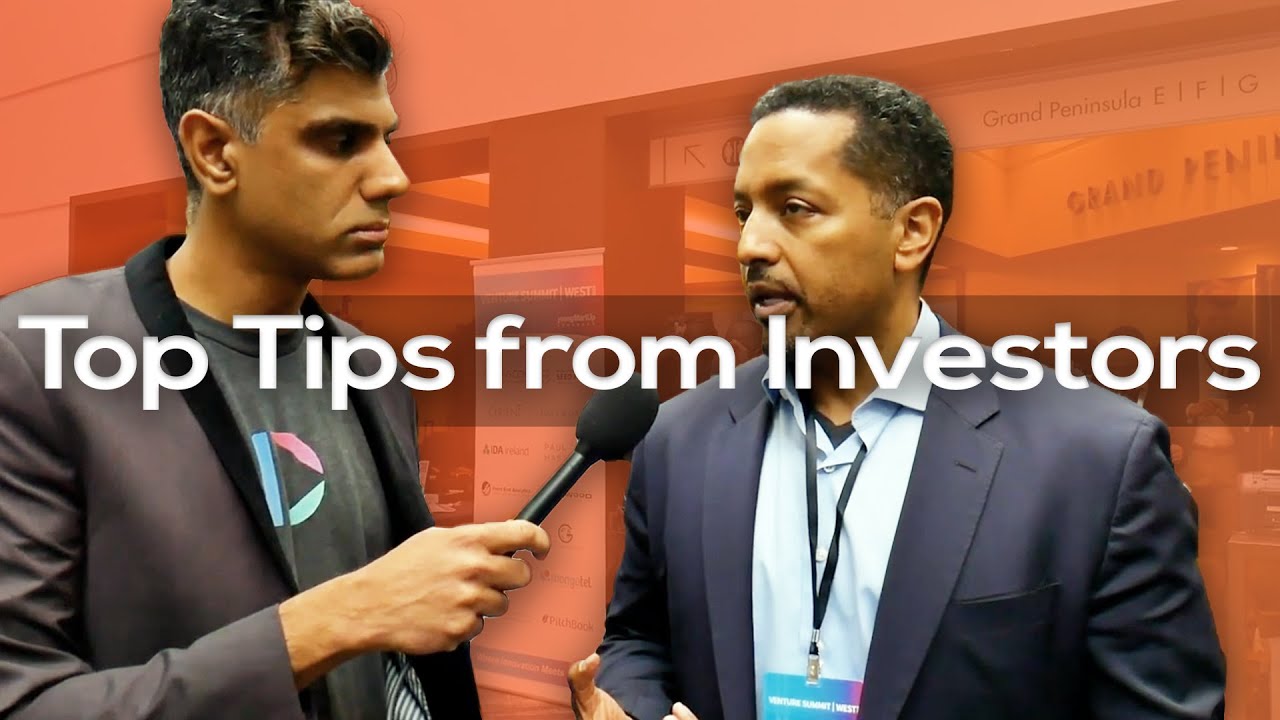
This is the companion article to the video. The full transcript is at the end, and the sections above it take the list of mistakes from the floor of Venture Summit West and turn each one into something a founder can check this month.
If you cannot describe it, you cannot sell it
The first mistake in the transcript is not a product mistake. It is the inability to say what the product is.
Founders who cannot describe the business in one sentence are not being modest. They have spent so long inside the detail that every summary feels like a lie. The investor hears that as uncertainty, and a buyer hears it as risk.
The fix is mechanical. Write the sentence in three parts: who it is for, what it replaces, and what changes for them. Not a category, not a vision, a substitution. We replace the spreadsheet a property manager rebuilds every month, and it saves them a day. If the sentence needs a slide, it is not finished.
Then test it on someone outside the business. Their follow up question is the real feedback: if they ask what it does, the sentence failed. If they ask who buys it, the sentence worked, and the conversation has moved to something useful.
Build the tightest feedback loop you can
The single most useful idea in the episode is that the key to growth is the shortest possible loop between trying something and finding out whether it helped.
Most small companies have a long loop and do not notice. A campaign runs for a quarter, results arrive in a monthly report, a meeting decides what it meant, and the next campaign starts two months later. By then the market has moved and the lesson is stale. The loop was not measuring the business, it was measuring the calendar.
Shorten it on purpose. Pick one thing to test, decide in advance what result would change your mind, and check it at the shortest interval the numbers can support. For an email sequence that might be a week. For a pricing change it might be a month. What matters is that the interval is written down before the test starts, so the answer cannot be negotiated afterwards.
Then keep the notes. A founder with twelve written tests at the end of a year knows their business better than one with twelve opinions, and the difference is not intelligence. It is a loop with a date on it.
If cash is the constraint rather than growth, making professional videos on a budget lists the cuts that do not cost you customers, video content marketing covers what a small team should make first, and how an AI sales automation tool helped me grow my business is a worked example of one owner rebuilding a process around a tool.
Retention before acquisition
A customer who leaves in month two is a cost, not a customer, and the transcript is blunt about it: you can spend a fortune acquiring people who try the product and bounce off.
Retention is unglamorous because it produces fewer charts. It is also the only number that compounds. If a hundred customers stay for a year, the second hundred cost less to serve and the third cost less still. If they leave, every acquisition is a treadmill.
The measurement that matters early is not a percentage, it is a person. Call the customers who left. Not a survey, a call, and not to sell them anything. Ask what they expected on day one, what they got, and where the gap was. Ten conversations will tell you more than any cohort table, and they usually point to the same two or three fixes.
Then fix one. A single fix that moves retention changes the economics of every channel you run, which is why it is worth doing before the next ad campaign rather than after it.
Write the answer to each call in the same document, in the customer's words. After ten calls the same phrase usually appears four times, and that phrase belongs in your onboarding, not in a strategy deck.
Paid ads are a filter, not a faucet
The temptation with paid acquisition is to treat it as a tap: turn it on, count the leads, turn it up. The transcript's warning is that the leads can look fine and still be the wrong people.
An ad can produce a hundred sign ups and no revenue if it promises something the product does not do, or if it reaches people who will never have the problem. The platform will report success, because the platform is measuring the click. Nobody measures the month two silence.
So attach a quality check to every paid channel. Of the leads from this campaign, how many took the second step, how many are still here after a month, how many paid. Track those three for one campaign before you scale it, and you will know whether you are buying customers or buying noise.
It also helps to say no to traffic you cannot serve. A business that cannot answer fifty enquiries in a week should not run a campaign that produces fifty, because the unserved ones are not neutral. They are people who tried you and were ignored.
Raise for the market you are actually in
One of the quieter observations from the conference is that plenty of companies raise money that does not match what the market will do next.
The mismatch shows up in two directions. Raise too little and the plan is a series of compromises: the hire you needed arrives late, the launch slips, the runway forces a decision you would not otherwise make. Raise too much and the plan grows to fit the money, which often means hiring ahead of demand and paying for growth that has to be bought again next year.
The honest version starts with the market, not the wish. How many customers exist, what they pay, how long it takes to sell, and what it costs to serve them. That arithmetic produces a number of months and a number of people, and the raise follows. It is less exciting than a vision deck and it survives contact with a board meeting.
For a business that is not raising at all, the same arithmetic applies to cash. Months of runway is a number worth knowing on the first of every month, not the week before payroll.
Three slides, three minutes
Twenty companies, three minutes each, and slides nobody can read. The transcript's takeaway about simplicity is a description of a filter, not a style preference.
An investor in that room is not evaluating your design. They are deciding whether to spend the next hour with you. Three slides are enough for that decision: the problem and who has it, what you do and the proof it works, and what you want and what it buys. Everything else is a second meeting.
The same rule applies to a sales deck, and for the same reason. The person across the table is deciding whether the next meeting is worth their time. A slide they have to read is a slide that competes with you for attention, and it usually wins.
Cut until it hurts, then cut one more. The details you removed are not lost, they are the answers you give when asked, which is a better place for them.
One test before any pitch: read the slides aloud without adding a word. If the story does not make sense from the slide text alone, the deck is doing the opposite of its job.
Persistent, not stubborn
Persistence is the trait most often named in stories about companies that worked. It is also the trait most often confused with refusing to read the evidence.
The difference is what you persist in. Persist in the problem and the customer, and stay flexible about the solution. A founder who insists the market will come around to their product is being stubborn with someone else's time. A founder who keeps interviewing the same customer until the product fits is being persistent with their own.
Practically, that means writing down what would make you change your mind, and checking it on a schedule. If the evidence has not arrived by the date, the plan changes, and that is a decision made calmly rather than in a bad month.
It also means being honest with the people who joined you. A team can survive a pivot. It struggles with a founder who will not name the thing that is not working.
Full transcript
Falling in love with your own ideas. Don't be too greedy. They buy into themselves too much, putting too much time into them before you seek feedback. They don't know how to talk about the product. You have a great product and you have a great team, and you don't know how to distill it. Lack of sort of deep synergy between the product and the market. You developed the product, but you're not developing the brand narrative. Spending money on Facebook ads, Instagram ads. It feels like you can target very well nowadays. But I would be careful to make sure that the users that you're acquiring are actually sticking on and using your product is being very quality users down the road. Don't be too greedy. Absolutely. Okay. You can be aggressive. You can go for it, but don't be too greedy. I'm going to get 100% of the market share. That's totally BS. What's up, guys? This is the Venture Summit West in Silicon Valley, California. And the whole theme for this conference is where innovation meets capital. So we got entrepreneurs and we got dreams. We have venture capitalists and we have money. And these two things are coming together to make dreams come true and to change our lives. So let's go check out the event. There's a lot of great pitches. There's a lot of great investors to see what's going on. She's turned down by too many investors or whatever, and you just give up. I see that a lot. Not being focused on your customers, your clients. Somebody says something and you follow up and do a little better details like, hey, that just wasn't true. A deal killer. Don't spend money, don't extend too bad. Are you able to manage client interactions in a way that provides you feedback to improve your product? Nowadays, it's very common to find growth in places that are false positives and are not really looking for as little as $50,000 to raise. And I've seen as high as $20 million. So there's a lot of different people that are looking for a lot of different types of capital, of partnerships. So one of my key takeaways here at the conference is keep your slides simple. I've seen some of the most complex slides. 20 startups in a room with some investors. There's investors sprinkled in the crowd, and then these startups are just pitching. They have three minutes per pitch. I am all about helping businesses communicate with video. Combine the areas of discovery, sales and marketing and screen sharing, not aligning the capital needs of the business with the reality of what the market can take. The key to growth is the tightest possible feedback loop. You can try anything, you can try everything, but you've got to get feedback on it as fast as possible. Be honest but competent. Hire the best people you can. Okay? And anything you can do to shorten the cycle between trying something and figuring out if it helped you or hurt you, and then responding to that feedback to prune the ideas that didn't help you and drive more effort into the ideas that did help you, that will leave you the tightest possible purchase. Viral. A lot of VCs here, a lot of angel investors, a lot of entrepreneurs pitching, and there's this man that has a blue balloon. We want to understand why. So I did present today, and there are a lot of presenters. Oftentimes you're looking for a presenter that you saw, but you can't really find them. And so this is like a homing beacon if you want to find me the guy. What are some indicators that we can focus on as entrepreneurs? Four week retention, 30 day retention, engagement. If there's kind of like the Holy grail of trying to sell them something, try to start testing that early on as opposed to later. You can throw a fortune acquiring customers who try your product, bounce off of it and go away, and you've just set that money on fire. The key is making sure that what you have is going to work. The secret success is to be persistent in the long run. I think great people who are highly committed working on a mission with some passion can do just fantastic things. So you met someone that you're sort of a fan of? I am. Well, I met an investor who is on this podcast called The Pitch. The Pitch is a podcast by Gimlit Media. Basically, it's kind of like shark tangy investors on that podcast. And I didn't know she was at this conference. She gave some great insights. There's very little discipline around the burn. That's one of the biggest issues. They are not spending their money on the branding piece. I believe they're wasting a lot of their runway on stupid decisions that are rushed into there should be a better process of decision making. One piece of advice you can give entrepreneurs, and he says, don't come to events like this. I mean, I just got done sitting through the I just sat through two rounds of the seed stage. There was 20 companies in each round. I got three minutes. I couldn't come close to enough information to invest that he said you couldn't waste a lot of money networking and going to these conferences and just having your backpack and sitting down and watch people speak. But should you really be heads down building your product? Should you be out there selling? So, of course, you take that with a grain of salt. But it's true, there are a lot of places to waste your money. And I think that if you can really focus on networking, building your product and making your customers happy, I think that's the best bet. All right, that's it. That's it. We're out here. There you go. It's another conference, another day, another conference. Another day, another conference.
Ready to see it for yourself? Start your free 7-day trial of Dubb and send your first video in the next five minutes.
Frequently asked questions
What is the single biggest mistake early stage founders make?
Being unable to describe the business in one sentence. It shows up as rambling pitches, unclear landing pages and slow sales cycles, and it is fixable in an afternoon.
How often should a small business review its metrics?
As often as the numbers can support, and no more. Weekly for enquiries and conversations, monthly for retention and revenue. Reviewing daily produces noise and a team that learns to ignore the report.
Should a company spend on ads before retention is healthy?
Only in small tests. If customers leave quickly, paid traffic buys you a bigger version of the same problem. Fix one retention issue first, then scale.
How many slides does a pitch need?
Three for the first meeting: problem, product with proof, and the ask. The rest belongs in the conversation or the follow up document.
One of them is attaching the video
Dubb sends a preview that links to a hosted page, so the email arrives and the video still plays.