App for Sales Videos - How to Use the Dubb Mobile App
Most sales videos are not recorded at a desk. They are recorded in the four minutes after a call ends, in a car park before a site visit, or in a corridor while the thing you wanted to say is still fresh. That is the gap the Dubb mobile app fills: the recording happens where the thought happens.
This is the walkthrough I give to a rep on their first day, covering what each screen does, which settings matter, how to send a video straight from the phone, and the mistakes that make a phone recording look rushed when it was not.
You will need a Dubb account, which you can create before you install the app. If you want the general overview of the mobile app first, how to use the Dubb mobile app covers the same ground at a higher level.
What the mobile app is for
Think of it as a recording studio in your pocket, with one difference that matters: the recording is tied to your account, your library and your tracking, so a video made on a phone behaves exactly like a video made on a laptop.
Three moments justify the install.
- Straight after a conversation. The follow up that mentions the exact objection from two minutes ago is the one that gets a reply, and it only exists if you can record it immediately.
- Between commitments. A walkthrough recorded from a phone in a hallway still beats a written answer that lands tomorrow morning.
- Anywhere the screen is the world. A site visit, a trade show booth, a product on a shelf. The phone is already the camera you have.
What it is not is a replacement for the desktop app when you need a long screen recording or a lot of editing. A phone is for the fast, personal, in the moment video, and it is very good at that specific job.
Download the app and sign in
The first step is the simple one. Install it for iOS or Android, open it, and sign in with the account you use on the web. The icon appears on your home screen and everything you record lands in the same library.
Sign in before you need it. The worst version of this workflow is installing the app in a car park while a prospect waits for a video.
The whiteboard feature
The whiteboard is a simple personalisation trick that punches above its weight. You type a line of text, such as a person's name with a greeting, and the app displays it full screen on the phone. Turn the phone sideways and the text fills the screen, then you hold the phone in front of your laptop or external webcam while you record there.
In other words, the phone becomes a physical name card for the camera that is already pointed at you. You can change the text size and the colour, so it reads clearly without dominating the frame.
I recommend it for one situation only: a recorded video for one specific prospect. A generic video with a name in the background looks like a template. A video that opens with the person's name, in your handwriting-adjacent frame, gets watched. It takes twenty seconds and it is the difference between looking like a vendor and looking like a person who noticed them.
The whiteboard pairs well with the Dubb Chrome extension if the main recording happens on a laptop, and with the technique in personalized video messages that get a reply if you want to go further than a name.
Record with the Dubb camera
Tap the plus button and choose to record. The app opens on the back facing camera, and the controls are more capable than they first appear.
- The lock icon, bottom left. With the lock off, you hold the trigger down to record, which suits short clips and gives you Instagram style control. With the lock on, a tap starts and stops, which suits a single take where both hands are busy.
- The library button. Adds clips you already have on the phone into the session, so one video can be a mix of live and existing footage.
- The flash. Useful in a dim room, and best left off in a small space where it flattens the face.
- The gear, top of screen. Sets the aspect ratio and the resolution.
On aspect ratio, use 9x16 for anything vertical and 16x9 for email. Square works but takes more time to frame well. On resolution, the fast setting is usually right: a video watched on a phone does not benefit from the highest setting, and the higher one takes noticeably longer to process.
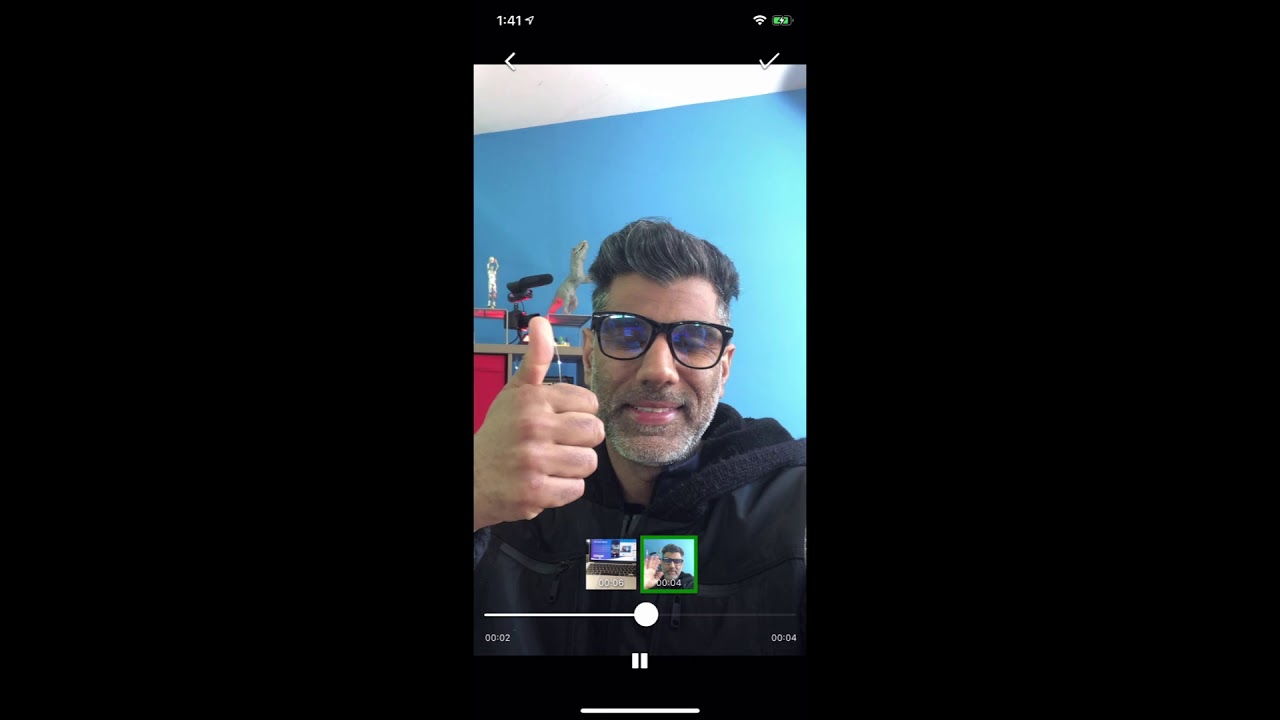
Once you have your clips, tap the checkbox and you get a preview list. Hold a clip to play, edit or delete it. For clips under ten seconds you can add text and emoji, and you can add filters and trim. Trimming takes a little more processing and gives you a clean cut, which is usually all a phone video needs.
Music and some filters sit in Dubb's pro packs. The app will offer a monthly subscription at that point. If you do not need music, ignore it and keep recording. Nothing about the core workflow depends on it.
When the clips are in the right order, tap the white checkbox at the top right to open the editing step for the whole video. The checkbox turns blue, and a download option appears to the left so you can save the finished file to the phone and post it wherever you like.
Upload a video you already have
Not every video needs recording again. Tap plus and choose upload to pull a file from your phone's library, or record a native video with the phone's own camera and upload that. The upload path is the fastest route when the footage already exists, and it handles both 9x16 and 16x9 files.
This matters more than it sounds. A rep who has a video on their phone from a site visit can put it on a tracked page in under a minute, which is the difference between using it and forgetting it.
Edit, set the call to action, upload
Tap the blue checkbox and the video uploads to your Dubb account. It usually lands within seconds and appears in both the app and your dashboard, though merging several clips takes a little more processing, so give it a moment before you panic.
Once it is there, the options that matter are the ones that decide whether the video does anything.
- Title and description. Name it something you will recognise in a list of two hundred videos, not Video 14.
- The call to action. Set the one action you want, matched to the stage of the conversation.
- The switches. Emoji buttons, sharing and automation. Turn on what fits the send, and leave the rest alone.
- Downloads. Allowed only if you want the viewer to keep the file.
- Tags. Add them at upload, because nobody goes back to tag a video later.
If the video is going into an email campaign, record in 16x9. It sits in the message better and avoids the awkward crop that a vertical video gets inside most email clients.
Tap the white checkmark and you get a final preview with the sharing options. That is the whole loop: record, set the action, upload, send.
Sharing, including copy for email
The paper plane icon opens sharing: text message, social channels and the rest. The three dots hide the option I use most, which is copy for email.
Copy for email opens a small module where you add personalisation text, then copies the video into your clipboard in a form you can paste straight into Gmail. What lands in the email is a three second animated preview plus a clickable button, so the recipient sees the video without an attachment and you still get the watch data.
That last detail is what makes phone video worth doing. A video sent as a file is a file. A video sent as a link is a report on Tuesday telling you who watched and how far they got. Tracking who watched is worth reading if the follow up matters more than the send.
Record on the phone, send in two minutes
The app records, uploads and shares, so the follow up leaves before you are back at a desk.
What to send from a phone, by situation
| Situation | Format | Length | Why the phone wins |
|---|---|---|---|
| After a discovery call | 9x16, camera only | 60 to 90 seconds | You can record it before the notes are cold |
| Before a site visit | 9x16, walk the space | 60 seconds | The place is the proof, and you are standing in it |
| Trade show follow up | 9x16, camera plus a pan | 45 seconds | It references the booth, which a template cannot |
| Answering a quick question | 9x16, camera only | 30 to 60 seconds | Faster than typing, and it carries your tone |
| Sending an existing demo | 16x9 upload | Whatever the file is | The footage already exists, so do not re-record it |
Mistakes that make a phone video look rushed
- Recording in a corridor. A phone mic picks up every footstep and every conversation within ten metres. A parked car with the engine off is a better studio than most offices.
- Holding the phone below the face. The default grip points up at a chin. Hold at eye level or rest the phone against something.
- Vertical video in an email. It gets cropped, and the crop usually takes the top of your head.
- Too many clips. Three cuts in a ninety second video feel like a montage. One clip with a trim is calmer.
- No call to action. A phone video with no next step is a nice gesture with no outcome.
- Sending the file. Send the link so you can see what happened.
How the app fits the rest of Dubb
The mobile app is one of four ways to record into the same account, and they are meant to be used together rather than chosen between.
- The Chrome extension for screen recordings, tab recordings and webcam from a laptop.
- The desktop app for longer sessions and recordings that switch between applications.
- The mobile app for fast, personal, in the moment video and for the whiteboard.
- Upload for footage that already exists.
Everything lands in one library with the same tracking, the same page templates and the same call to action options. That consistency is the point. A rep should not have to remember which tool has which report. There is a fuller comparison of the recording routes in how to record a video in Dubb if you are deciding where to start.
Light, sound and steadiness on a phone
A phone is a good enough camera, and a poor enough microphone that sound is usually what makes a mobile video feel cheap. Four fixes cost nothing.
| Problem | The fix | Why |
|---|---|---|
| You sound far away | Record in a small soft room, or sit in a car with the engine off | Hard surfaces bounce sound, and a car interior absorbs it |
| The wind takes over | Stand with your back to the wind, or step inside | Phone mics have no wind protection worth relying on |
| Your face is in shadow | Face the brightest light, usually a window or the sky | Front light is the only light that flatters a face |
| The frame shakes | Rest the phone against something, or hold it with both hands and your elbows in | Small movements are magnified at arm’s length |
Two more habits help. Record a two second pause before you start talking, which gives you a clean edit point at the front. And watch the background for one moment before you press record: a whiteboard with another client's name, a screen with an inbox open, a person who did not agree to be in the video.
If you record outside regularly, a small clip-on microphone is the only accessory worth buying. It will change the perceived quality of your videos more than any camera upgrade, and it costs less than a month of most sales tools.
Send it as a text, not an email
Once the video is in the library, the phone is also the best device to send it from, because the message goes in the channel the person is already holding. A link by text gets opened in minutes. The same link in an email gets opened when the inbox is next checked, which for a buyer is often tomorrow.
Two rules make it work. Keep the message to two lines: what the video covers and how long it is. Then let the link do the rest. A text with a paragraph above a video link reads like a newsletter, and it gets skipped on a phone.
Send the link, never the file. A file sent by text is compressed by the carrier and arrives smaller than you recorded it, and you learn nothing about whether it was watched. A link opens the page, plays at full quality, and reports who watched. The video texting app guide covers the carrier side, including why MMS degrades video and what to do about it.
One more habit: reply to the reply from the same place. If the prospect answers the text, answer with another short video rather than switching to email. The channel that got the reply is the channel that will get the next one.
What the app does not replace
Being honest about the limits saves people from trying to do the wrong job on a phone.
- A screen recording longer than a couple of minutes. Use the extension or the desktop app, where the screen is the subject and the phone is just a camera pointed at nothing.
- Editing a finished piece. Phone trimming is for cutting the first three seconds, not for building a produced video with titles and music cues.
- A campaign send. Bulk email and SMS sequences belong on the web dashboard, where you can see the list, the segments and the schedule.
- A document review with frame by frame detail. A laptop screen recording is the right surface when the viewer needs to read what you are pointing at.
The app is excellent at one job: a short, personal video recorded and sent before the moment passes. Judged against that job, it is the tool I reach for most, and it is the one I recommend to a new rep before they learn the dashboard.
Frequently asked questions
Questions people ask
Is the Dubb mobile app free?
The app is free to install and use with a Dubb account, and a free trial covers the paid plans. Some extras inside the app, such as music and certain filters, sit in the optional pro packs and are clearly marked before you use them.
Can I record a video on my phone and send it from my laptop?
Yes. Anything recorded in the app uploads to your Dubb library, so it is available on the web dashboard where you can apply a page template, change the call to action or add it to a campaign.
What is the whiteboard feature for?
It displays a line of text, usually a person's name, full screen on your phone so you can hold it in front of a webcam while recording on a laptop. It is a fast way to personalise a one to one video.
Which aspect ratio should I use?
9x16 for anything watched on a phone or posted vertically, and 16x9 when the video goes into an email campaign. Square works but takes longer to frame properly.
Why does my upload take a while?
Merging several clips takes more processing than a single clip. The upload itself is usually quick, and the video appears in the library once processing finishes.
Can I send a video by text from the app?
Yes. The share menu includes text message, which is the most common way I send a video from a phone. The SMS workflow, including what carriers do to video quality, is covered in the video texting app guide.
The next follow up can leave before you sit down
Install the app, record a 60 second video for a real prospect, and send it with tracking from wherever you are.